Award-winning garden designer and broadcaster Juliet Sargeant has been appointed a Member of the Order of the British Empire (MBE) for services to horticulture in the King’s Birthday Honours List.
Juliet, a regular panellist on BBC Radio 4’s Gardeners’ Question Time, is one of the UK’s most respected garden designers and tutors and is a leading voice in horticulture.
Originally trained as a doctor, she changed career to study garden design and went on to build a successful practice, teach garden design and planting, and work with clients across the UK. In 2016 she became the first black woman to design a garden at RHS Chelsea Flower Show, winning both a RHS Gold Medal and the People’s Choice Award for her acclaimed Modern Slavery Garden.
A former chair of the Society of Garden Designers (SGD), Juliet has also presented on BBC TV Gardeners’ World and runs the Sussex Garden School near Horsham alongside her design practice.
Juliet Sargeant said: “I’m honoured to have been recognised in this way for my work in horticulture, and I’d like to thank those who nominated me.
“Horticulture is a generous industry with a heart for sharing and I’m delighted to see a new generation of professional designers and gardeners, from all walks of life, taking positions of responsibility. The sector has long faced challenges around career progression, pay and business training, as well as a lack of role models for women, people from less affluent backgrounds and people of colour.
“After winning a RHS gold medal for The Modern Slavery Garden at RHS Chelsea in 2016, I was regularly contacted by young people asking how to become a garden designer. Being the first black woman to design a show garden at Chelsea showed others that a career in garden design was possible for them too,” she added.
Juliet also highlighted the role of the SGD in raising professional standards across the sector. “The Society of Garden Designers has played a vital role in improving training and professional standards over the past few decades. I’m particularly pleased to see the organisation now pursuing chartered status, which is an important step forward for the profession.”
Reflecting on her long-standing commitment to training, she added: “I’ve been teaching garden design for 30 years and continue to be inspired by the creativity, passion and ambition for emerging designers. I am excited to see how the new generation will help horticulture play an even greater role in supporting people’s well-being and creating positive change in society.”
Juliet’s RHS show garden portfolio also includes The Lion King 25th anniversary garden for Disney and The New Blue Peter Garden: Discover Soil. She won awards from the SGD in 2012 and 2015, for sustainability and hard landscaping design. In 2017 Juliet was made a Fellow of the SGD for her contribution to garden design and horticulture, and in 2019 she was made Fellow of The Landscape Institute.
In 2016 Juliet was celebrated for her role as a change-maker and role model at the GG2 Leadership Awards. She was also one of the Evening Standard’s Progress 100 influential people. In 2018 she was named as one of the BBC 100 Women.
The UK’s finest collection of rare and colourful lachenalias, known as ‘leopard lilies’, will go on display at Exbury Gardens in Hampshire when it reopens for the 2026 season.
Exbury is home to the country’s most comprehensive lachenalia collection, and along with an array of beautiful orchids, it will be on display in the Five Arrows Gallery within the gardens when they reopen on 7 March.
With their unusually long flowering season, lachenalias boast hues of bright orange, yellow and pinkish-red, and originate from South Africa and Namibia. They are relatives of the hyacinth and there are about 120 species and several hybrids.
The exhibition will also include Exbury’s extensive Cymbidium orchid collection, reflecting the de Rothschild family’s long tradition of championing rare and unusual plants. The gardens’ founder, Lionel de Rothschild, collected a substantial variety of orchids during the 1920s and 30s but the collection was lost after Exburywas requisitioned in WWII and Lionel’s death in 1942. Over recent years it has been rebuilt and goes on display each spring with the leopard lilies.
Outside in the gardens at Exbury visitors can explore Daffodil Meadow which sweeps down to the Beaulieu River in a blanket of naturalised blooms, while the River of Gold creates a ribbon of more than 100,000 yellow and blue bulbs. Magnolias, rhododendrons and other woodland highlights will add to the spring flower power
March marks peak bloom for Exbury’s exceptional camellias. With more than 600 different types and international recognition as a Camellia Garden of Excellence, Exbury offers one of the country’s finest collections. The original 1930s Camellia Walk is planted with historic Exbury hybrids including ‘Inchmery’ and ‘Charlotte de Rothschild’, while the New Camellia Walk boasts American selections such as ‘Extravaganza’, ‘Kickoff’, ‘Freedom Bell’ and ‘Bob Hope’. Camellias donated by renowned grower Jennifer Trehane provide further early-season colour in the Connoisseur’s Garden.
2026 also marks the 25th anniversary of Exbury’s famous steam railway, the Rhododendron Line. Celebrations will include a special rail-themed weekend in June, offering activities for families and enthusiasts alike
Head gardener Tom Clarke said: “Spring at Exbury is always a highlight, and the mix of leopard lilies, orchids and early outdoor colour promises a real treat for visitors. Our lachenalia collection is something really special and definitely worth a detour into the Five Arrows Gallery if you are visiting the gardens. It’s a wonderful way to welcome the new season.”
The lachenalia and orchid exhibition is free with gardens admission or membership. www.exbury.co.uk. Exbury Gardens is open daily from 7 March to end of November, 10am–5.30pm.
ENDS
For further information or images, contact PR Emma Mason on 07762 117433 emma@emmamasonpr.co.uk
Notes for editors:
www.exbury.co.uk Thanks to its unrivalled collection of rhododendrons, azaleas and camellias, Exbury Gardens is famed for its riot of spring colour, as well as a vast array of beautiful, mature rare trees. Over recent years the Hampshire garden has been expanded for all-season interest with areas designed to show off summer and autumn ‘flower power’, as well as an extension of its 1 ½-mile Rhododendron Line steam railway.
2025 has been dubbed the‘YearoftheAphid’ as new data from Garden Organic and the grow-your-own app Fryd reveals that climate extremes are making it harder for UK gardeners to grow the traditional vegetables their grandparents relied on.
Findings from the sustainable gardening charity’s recent annual citizen science survey, run with popular veg growing app Fryd, show while 2024 was dubbed the ‘Yearofthe Slug’, 2025 seems to have been the‘YearoftheAphid’. Hot, dry conditions fuelled a surge in pest outbreaks, crop bolting and poor harvests for some of our most familiar home-grown favourites. However, sun-loving veggies such as tomatoes and amaranth flourished.
According to the Met Office, 2025 was the UK’s warmest and sunniest year on record, with the second driest spring ever recorded. While slugs were largely absent, dry soils and high temperatures created ideal conditions for black bean aphids on broad beans and cabbage aphids on brassicas, and caused early bolting in crops like lettuce.
Dr Anton Rosenfeld, who leads Garden Organic’s citizen science programme, said: “Some of our traditional British crops are struggling to cope with theextremes of seasons: an onslaught of slugs in wet years, and a plague ofaphids or early bolting in dry years. Milder winters often mean that more slugs survive into the following year. Runner beans have faired consistently badly in hot seasons, with pods frequently failing to set.
“We will have to diversify our range of crops to cope, including more drought resistant leafy crops such as amaranth, and growing more perennial crops that have better ability to cope with drought and the challenges posed by pests.”
He added: “As 2024 was yearofthe slug, 2025 was yearoftheaphid, with brassica crops being plastered in cabbage aphids in the early part ofthe season. As is common, aphids departed in early July and many crops recovered surprisingly well when the rains arrived.”
Garden Organic’s best and worst performing crops of 2025
The survey shows a clear split between crops that struggled under drought stress and those that thrived with warmth and careful management:
Runner beans performed worst overall for the second time in recent dry years, with nearly half producing poor or no yields due to lack of water and poor pod set.
Lettuces bolted rapidly in summer heat, forcing gardeners to reply on rapid succession sowing.
Squashes avoided the slug damage seen in 2024 but performed unevenly. Well-established plants with reliable water did well but 40% produced poor or no yields with early powdery mildew, poor fruit set and stalled growth common in dry conditions.
Brassicas struggled early due to aphids, cabbage white butterflies and bolting but crops that survived recovered later in the season to deliver good autumn harvests.
Onions delivered mixed results. Growers using mulch or no-dig beds achieved good yields but many saw poor growth or undersized bulbs, often thanks to dry, compacted soil and limited watering.
Carrots also had a mixed year. Germination often failed in hot, dry soil but crops that established well, produced good harvests once rain returned, helped by low slug damage and a dearth of carrot fly.
Potatoes struggled in hot, dry soil with many gardeners reporting undersized spuds and scab, despite lower levels of blight and slug damage.
Tomatoes were the strongest performer, benefitting from the warmth and easier irrigation in pots and greenhouses.
Chard and amaranth showed resilience, with amaranth described by one grower as a ‘star crop’ during the heat. Amaranth is mostly grown in the UK for its tasty leaves which are a bit like spinach.
Some ofthe growers stressed even if they achieved good results, this was thanks to an array of adaptation measures such as mulching, good soil preparation through no-dig, using shade cloth and successional sowing.
For 65 years, Garden Organic has brought gardeners together to share what works on their organic plots via its citizen science projects. The 2025 survey marked a step change in how Garden Organic collects data. By teaming up with Fryd, gardeners can now record crop performance directly on their phones as they grow, turning everyday observations into useful citizen science insights.
Florian Hassler, co-founder of Fryd said: “What gardeners experienced in 2025 is exactly why we need better, real-world data. Yet much ofthe advice gardeners are given hasn’t changed for decades.
“With Fryd, gardeners can record what’s actually happening in their own plots, in real time. When thousands of people do that together, we can start to build growing advice that reflects today’s climate not the one our grandparents gardened in.”
ENDS
In its annual survey Garden Organic asks gardeners to rate the performance of ten common crops on a scale from 1-5. The aim is to gather information that can be used to provide a helpful summary of how each crop responded to the climatic conditions around the UK.
The survey, now in its fourth year, gathered responses from over 300 gardeners with the help of digital gardening app Fryd.
Fryd (pronounced Frood) is one of Europe’s most popular garden planning apps, helping over 300,000 gardeners plan, grow and share their veg patches. Thedigital garden companion allows users to create bespoke planting plans for their gardens or allotments, discover companion planting combinations, and get personalised sowing advice based on local climate and frost dates.
Fryd is steward-owned, purpose-driven and promotes eco-friendly, sustainable gardening.
Fryd Lab, available in the free version ofthe app, offers access to community-led citizen science experiments. Fryd is available to download in the UK on both iOS and Android platforms. Joining the Fryd community is free or subscribe to Super Fryd (£9.99 p/month, £44.99 p/year or £179.99 lifetime subscription) which boasts lots of enhanced features.
About Garden Organic
Garden Organic promotes organic growing and composting, citizen science and research, and seed conservation through its Heritage Seed Library. Its aim is to help people grow ‘the organic way’, using natural methods to promote healthy, biodiverse, sustainable gardens.
Founded in the 1950s as the Henry Doubleday Research Association, it has been leading the way in researching and demonstrating best practice organic growing for more than 65 years and brings together a movement of thousands of growers keen to have a positive impact on the green space they nurture.
Got a veg patch? Help shape the future of UK organic gardening in just a few taps
Sustainable gardening charity Garden Organic is linking with popular veg growing app Fryd to revolutionise how it collects data from gardeners for its much-loved annual survey – marking a new era for citizen science in UK horticulture.
Fryd Lab
For 65 years Garden Organic has been running citizen science projects to help gardeners embrace organic techniques or grow better.
In this latest survey, gardeners are asked to rate the performance of ten common crops on a scale from 1–5. The results provide a valuable snapshot of how each crop has fared under that year’s growing conditions, insights that help track trends, evaluate crop resilience and highlight how the UK’s changing climate is affecting home-grown food production.
This year, for the first time, the widely respected survey will be available throughout November via the Fryd app, the digital garden companion, so people can log their findings via their mobile phone as they garden. The aim is to make it easier than ever for gardeners to take part, reach new growers and scale up participation in Garden Organic’s citizen science efforts.
The partnership forms the first of many citizen science experiments hosted in Fryd Lab, a new feature within the Fryd app designed to make local, at-scale data collection simple and engaging. Fryd Lab’s mission is to crowdsource real-life insights to help fix outdated gardening advice, particularly as shifting weather patterns mean traditional seed packet sowing dates no longer match local realities.
“Gardeners are on the front line of climate change, they see and feel the seasons shift, but advice hasn’t kept pace,” said Florian Hassler, co-founder at Fryd. “With Fryd Lab, one five-minute contribution could help your whole area get better local sowing and planting guidance next season. You can even do it on your phone whilst you garden!”
For 65 years, Garden Organic has brought gardeners together to share what works on their organic plots via its citizen science projects. Thanks to the new link-up with Fryd, everyday allotment growing notes and individual garden observations over time will be converted easily into useful local advice for everyone.
“I look forward to this collaboration taking organic gardening citizen science to a whole new audience using Fryd’s modern accessible platform to reach thousands more growers across the UK,” said Dr Anton Rosenfeld, who heads up Garden Organic’s citizen science work.
The 2024 growing season, dubbed by many as the ‘Year of the Slug’, saw relentless rain, snails and slugs challenge gardeners nationwide. With 2025’s heatwaves, drought and hosepipe bans, this year’s findings will be especially valuable for understanding the impact of extreme weather on crop success.
The Garden Organic survey will run for the whole of November and is free for anyone in the UK to complete via the Fryd app. Fryd is available as a free download, at no charge at all, in the UK on both iOS and Android platforms. Results will be published in the new year on the Garden Organic website and via the Fryd app.
To coincide with the survey’s launch, Fryd will host an online Citizen Science Week 1-7 November, featuring discussions with scientific partners, garden experts and growers about why we need better, localised gardening data and how gardeners themselves can help provide it. It will also announce a new Fryd Lab experiment on soil health with Hort2The Future, and run a soil health quiz, testing growers’ knowledge about soil
ENDS
About Fryd
Fryd (pronounced Frood) is one of Europe’s most popular garden planning apps, helping over 300,000 gardeners plan, grow and share their veg patches. The digital garden companion allows users to create bespoke planting plans for their gardens or allotments, discover companion planting combinations, and get personalised sowing advice based on local climate and frost dates.
Fryd is steward-owned, purpose-driven and promotes eco-friendly, sustainable gardening.
Fryd Lab, available in the free version of the app, offers access to community-led citizen science experiments. Fryd is available to download in the UK on both iOS and Android platforms. Joining the Fryd community is free or subscribe to Super Fryd (£9.99 p/month, £44.99 p/year or £179.99 lifetime subscription) which boasts lots of enhanced features.
About Garden Organic
Garden Organic promotes organic growing and composting, citizen science and research, and seed conservation through its Heritage Seed Library. Its aim is to help people grow ‘the organic way’, using natural methods to promote healthy, biodiverse, sustainable gardens.
Founded in the 1950s as the Henry Doubleday Research Association, it has been leading the way in researching and demonstrating best practice organic growing for more than 65 years and brings together a movement of thousands of growers keen to have a positive impact on the green space they nurture.
One of the world’s most spectacular collections ofNerine sarniensis, also known asJewel Lilies, will sparkle into bloom at Exbury Gardens in Hampshire this autumn, offering visitors a rare botanical treat.
From1 October to 2 November 2025, theFive Arrows Galleryat Exbury will be transformed by a glittering showcase of these autumn-flowering bulbs. Part of a historic collection begun over a century ago by banker and horticulturalistLionel de Rothschild, the display now features over900 varietiesin a dazzling array of colours, from fiery orange, scarlet and white to more recent additions in pinks, purples, mauves, bronzes and copper. Their petals are flecked with gold or silver crystalline ‘dust’, making them glisten in the autumn light.
Originally discovered onTable Mountainin South Africa, Jewel Lilies have become a much-loved feature of Exbury’s seasonal highlights and a testament to the Rothschild family’s enduring horticultural legacy.Many of these rare and delicate plants will also be available to purchaseduring the exhibition.
Admission to the Nerine Exhibition is included with entrance to Exbury Gardens, the renowned 200-acre woodland garden in the New Forest. Alongside the nerinecollection, visitors can enjoy theNational Collections of Nyssa and Oxydendrum plus more than450 varieties of Acers, ensuring displays of gorgeous autumn colour throughout the grounds, as well as the Rhododendron Line steam railway
Opening times: Daily from 10am to 5.30pm Exhibition open: 1 October – 2 November 2025, 10am – 5pm Location: Five Arrows Gallery, Exbury Gardens, Hampshire Website: www.exbury.co.uk
ENDS
For further information or images, contact PR Emma Mason on 07762 117433 emma@emmamasonpr.co.uk
Notes for editors:
Exbury Gardens, located in the New Forest near Southampton, is open daily from 10am – 5.30pm. www.exbury.co.uk Thanks to its unrivalled collection of rhododendrons, azaleas and camellias, Exbury Gardens is famed for its riot of spring colour, as well as a vast array of beautiful, mature rare trees. Over recent years the Hampshire garden has been expanded for all-season interest with areas designed to show off summer and autumn ‘flower power’, as well as an extension of its 1 ½-mile Rhododendron Line steam railway.
Admission prices – to season close, £14 standard adult and £6 child. Under 3s Free. Family tickets (2 adults + 2 children) £38 (July-November).
Award-winning garden designer Zoe Claymore is hosting a special fundraising talk this October in support of Devon’s Stone Lane Gardens.
Zoe’s British Rainforest Garden, created for The Wildlife Trusts, sponsored by grant-giving charity Project Giving Back and supported by insurer Aviva, wowed visitors at RHS Chelsea this May, winning the coveted People’s Choice Award. She will be sharing the inspiration behind the design, revealing how Devon’s lush, rain-fed woodlands and her own family heritage shaped the look and feel of the garden.
The event takes place on Saturday 11 October at Endecott House, Chagford, just a short distance from Stone Lane Gardens, the botanic garden co-founded by Zoe’s great uncle, Kenneth Ashburner. The gardens, which used to be known as the Mythic Garden, are home to the National Collection of Birch and Alder trees, some of which featured in Zoe’s Chelsea design.
British Rainforest Garden credit Clive Nicholls
In her talk, Zoe will explore how themes of heritage, landscape and sustainability came together in her rainforest garden, and she will offer practical advice for recreating elements of the design at home, including how to use birches from Stone Lane Gardens to achieve the look.
The talk will last around 45 minutes, followed by a Q&A. Tickets are £10 (advance) and £12 (on the door), information via the Stone Lane Gardens website, with all proceeds going to support Stone Lane Gardens. Attendees will also have the chance to enter a raffle to win a one-to-one design consultation with Zoe.
Event details:The Story Behind the Rainforest Garden at Chelsea Date: Saturday 11 October Time: 7pm Venue: Endecott House, Chagford, Devon TQ13 8AJ Tickets: Advance £10; £12 on the door
Zoe Claymore is a garden and landscape designer based in southwest London but works across the UK. From her studio, she crafts bespoke outdoor places that resonate emotionally with her clients – while staying mindful of environmental responsibility. Named RHS Horticultural Hero 2023, a triple award-winner at RHS Hampton Court, and double Chelsea winner, she draws on personal, cultural, environmental, and artistic inspirations to shape her designs. A regular media contributor and public speaker, Zoe advocates for innovative, sustainable, and deeply personal landscaping solutions that stand the test of time. www.zoeclaymore.com
Stone Lane Gardens was the creation of Kenneth and June Ashburner, the owners of the grade 2* listed Stone Farm. Kenneth was an avid traveller and plant finder and in the early 1970s began planting the trees he had grown from seeds gathered on his travels and from other botanic gardens. Gradually the garden expanded as the Ashburners bought land, until it took the shape it is today. Originally called the Mythic Garden they started an annual summer sculpture exhibition, which this year is again curated by South West Sculptors showcasing the best outdoor art from West Country artists. Plant Heritage awarded the gardens its ‘National Collection’ status in recognition of the importance of the diversity and rarity of its trees, and ‘Scientific Status’ in acknowledgement of the great work Kenneth Ashburner had done to extend and promote knowledge of the species, work that continues today under the stewardship of Garden Manager, Paul Bartlett. In 2019 Stone Lane Gardens became an RHS Partner Garden and in 2024, Stone Lane Gardens proudly became an accredited BGCI Botanic Garden, an internationally recognised, very prestigious and unique world-wide accolade bestowed by the BGCI at Kew, London. https://stonelanegardens.com
The Wildlife Trusts British Rainforest Garden, sponsored by Project Giving Back (PGB) and supported by the UK’s leading insurer Aviva, was awarded a Silver Gilt and People’s Choice medals at RHS Chelsea Flower Show 2025. It aimed to inspire people to support the restoration of this threatened habitat and show how nature-friendly gardening can help British wildlife thrive. The Wildlife Trusts and Aviva have been working together since 2023 on a mission to bring rainforests back to the British Isles. The British Rainforest Garden told the story of this precious habitat that once blanketed a fifth of the country but now only covers about 1% of the land – and the work underway to recover it.
Introducing the new SummerCool legwear collection from Genus
A hot day in the garden demands the coolest clothing, so when you’re working hard, keep your cool with the new SummerCool legwear range from Genus, featuring lightweight, dynamic thermoregulation fabric that cools you faster as you get warmer.
The right gardening trousers can significantly impact comfort and efficiency and since 2013, Genus has become the go-to for professional and amateur gardeners alike, with clothing known for its technical, durable and built-to-last qualities, that’s also packed with unique gardening-specific features to ensure a great day in the garden.
Designed by gardeners for gardeners, the new SummerCool gardening trousers and shorts for men and women are ideal for any gardening task in warmer weather, incorporating a unique combination of durability, performance, comfort, cooling and ventilation, along with all the horti’ features Genus clothing is renowned for, and customers love.
Going the extra mile to get the right fit and comfort level, this range also has eight waist sizes and three leg lengths across all sizes. Plus an X-long option, and NEW extra short option, over four waist sizes.
Lightweight, dynamic thermoregulation fabric cools you faster as you get warmer
Mesh-lined vents and pockets enhance air circulation around the legs while keeping out bugs
Roll-up straps on the trousers keep ankles cool
UPF 50+ rating protects on the sunniest of days
Packed with clever ‘horti features:
Breathable, adjustable kneepads on the trousers
Part-elasticated waistband for freedom of movement and perfect fit
Studs at the hem of the trousers allow the hem to be cinched tightly around boots or shoes, keeping dirt, mud and debris out
D-ring for keys
Stylish belt
A whopping 10 pockets on both the trousers and shorts, including a small, zipped pocket at the back to keep small items secure
Two colours, Thyme and Indigo
The new Genus SummerCool Legwear range is available now, with despatch to anywhere in the UK and overseas.
The human connection to plants, and our deeper need for them beyond food and beauty, is enchantingly explored by designers Emily Grayshaw and Jude Yeo in their Feature Garden, RHS Healer’s Hollow, at RHS Hampton Court Palace Garden Festival.
Rooted in the rich traditions of herbal medicine dating back hundreds of years, the garden blends folklore, healing and horticultural beauty. It also highlights the growing modern trend to reconnect with nature and recognise the vital role plants continue to play in supporting and protecting our health.
Set in a British woodland glade, a shepherd’s hut is nestled amongst native trees and verdant planting. Beautiful linens with hand-printed botanical drawings give an artistic nod to the cultivated herbaceous beds containing plants carefully selected for aiding skin, digestion, wellbeing and women’s health. Parsley helps with collagen production and skin elasticity, fennel relieves bloating and stomach pain, and peppermint serves as an natural analgesic for painful periods.
A boulder sits amongst the planting and is a simple mortar for preparing herbs to use in tinctures, oils and poultices, with a nearby waterfall and babbling brook adding to the calming ambience. As well as celebrating plants for purpose, the garden encourages visitors to reconnect with the British countryside and its native woodland species.
Designers Emily and Jude, who run Inspired Earth Design, were approached by the Royal Horticultural Society (RHS) to design this garden after winning two gold medals at previous shows, and a best in show award.
Jude said: “We are honoured to be commissioned for such a prestigious project at RHS Hampton Court Palace Garden Festival this year. We’ve loved the opportunity to be creative with our plant palette to explore the connection between plant folklore, and plants for medicinal and health purposes. We can’t wait for our visitors to explore the myriad of health benefits that plants can offer.”
Emily added: “It has been an absolute joy exploring the topic of medicinal plants through the eyes of Gaia, a healing woman who lives in a beautiful shepherd hut in a glade in the woods. The off grid feel of the garden emphasises that plants are the origin for so many of our modern medicines and that sharing of ancient knowledge is key to our development of the garden.”
After the show is over, elements from the garden will be relocated to Farncombe Community Garden near Godalming in Surrey, the brainchild of a determined group of local GPs who are keen to encourage social prescribing as part of a treatment plan.
To create the garden, Emily and Jude have assembled a talented team of artisans and fellow experts including:
Artist Georgia Lingwood has created the botanical artworks depicting key plants in the garden on signage and textiles.
Kayleigh Sinclair, Horticulture Team Coordinator at the RHS and founder of The Historical Herbologist, has advised on plants.
Hannam & Taylor has supplied a handcrafted shepherd’s hut.
Cobham Court Landscaping has built the garden, with support from Shade Landscapes, experts in creating naturalistic streams and waterfalls, and Aqua Design & Landscaping.
Boulders on the garden have been sourced from Caradon Stone, other stone and the bridge have been supplied by Allgreen, and materials for the water feature are from Aquascape. Paul Cheetham of Gecko Stonework has crafted the pathway using dry-stone walling offcuts.
Helping to plant the garden is Sarah Mayfield, a designer and lecturer who teaches horticulture to medicinal herbal students, as well as an incredible army of horticultural volunteers.
Plants are supplied by Hardy’s Plants and trees from Majestic Trees.
Notes for editors: Inspired Earth Design – Emily and Jude have been working together, in the horticulture industry, for over 20 years. They bring a wealth of practical knowledge and experience to the Inspired Earth Design studio having consolidated their design skills by gaining their professional garden design diplomas in 2021. Since then they have won two Gold medals at RHS Hampton Court and a best in show, and have completed a huge variety of private and commercial projects.inspiredearthdesign.co.uk | hello@inspiredearthdesign.co.uk |Instagram @inspiredearthdesign
Farncombe Community Garden – based near Godalming, thriving thanks to an expanding group of local volunteers. The idea came from GPs at the nearby practice who wanted to encourage patients and the community at large to interact with nature and each other to benefit their physical and mental health. Their vision is encompassed in the phrase ‘ growing community wellbeing’.
Hannam & Taylor – based near Windsor, its team of craftworkers build beautiful bespoke huts for clients. hannamtaylor.co.uk
Georgia Lingwood – an artist inspired by the natural world; its flora, fauna, and folktales. Working in pencil and watercolour she creates pieces depicting the plants, insects and animals that have captured her imagination, often selecting those with fascinating folkloric connections. georgialingwood.com
Cobham Court Landscaping – a Surrey-based business driven by a local, friendly team of talented professionals with award-winning skills. They’ve been transforming gardens in the local area for over 15 years. cobhamcourtlandscaping.co.uk
Sarah Mayfield – a garden designer, horticulturist, and lecturer with a focus on nature friendly gardens, Sarah teaches horticulture to medicinal herbal students, who learn how to grow and care for the plants they use in their practice. She was awarded The People’s Choice Award and Silver-Gilt medal at 2024 RHS Hampton Court for The Moonshadow Moths Garden, a resilient planting pocket inspired by moths and night pollinators. sarahmayfielddesigns.com
Allgreen – Masters in Stone providing natural stone surfaces and landscaping products to garden designers, architects and private clients worldwide. allgreen.uk
Caradon Stone – the only supplier of Caradon Cornish granite, a premier construction material prized for its durability and sustainable properties. caradonstone.co.uk
Shade Landscapes – a family business specialising in designing and building naturalistic ponds, streams, and water features that bring movement, wildlife, and tranquillity into your garden. shadelandscapes.com
Aqua Design & Landscaping – a Berkshire-based company specialising in bespoke water features. aquadesignlandscaping.co.uk
Aquascape – Aquascape connects people to water the way nature intended. From fire and water displays to Pondless® Waterfalls and ecosystem ponds, its products enhance landscapes and create inviting spaces for gatherings. With over 30 years of experience, Aquascape ensures reliable, high-quality products that bring beauty and nature to outdoor living spaces. aquascapeinc.com
Gecko Stonework – involved in construction and hard landscaping since 1988, having worked for and on behalf of many leading garden designers and architects. Working with natural stone and organic materials, producing bespoke garden features to enhance any outdoor space. geckostonework.co.uk
Verdigris – contemporary copper metal bird baths. Verdigris UK designs and makes large contemporary bird baths which add a decorative and elegant element to your outside space or garden. Not just ornamental pieces but they also provide a vital source of water for garden birds. The company tries to make all its bird baths from reclaimed copper and steel, so they are built to last. verdigris.uk
Newby Hall has won a prestigious gold medal at the RHS Chelsea Flower Show (20-24 May) for a North Yorkshire-inspired plant display – its first ever at the world’s most famous horticultural event.
The woodland-themed display highlighting some of the most eye-catching and unusual varieties of Cornus, a nod to Newby Hall’s renowned National Plant Collection of Cornus, was given the top award by RHS judges.
These beautiful flowering dogwood trees and shrubs boast colourful ‘flowers’ in April, May and June. The RHS Chelsea display had been carefully designed by Newby Hall’s head gardener, Lawrence Wright, in collaboration with owners Richard and Lucinda Compton, who now curate the collection.
Lawrence Wright (pictured with Lucinda Compton) said: “We are absolutely thrilled to have won a gold at RHS Chelsea Flower Show. To be judged as being amongst the best of the best in the horticultural world is incredible, putting Newby Hall’s plant collection firmly on the national and international map. Thank you to all of our team for their hard work in helping us prepare for this. We are now really looking forward to showing the thousands of show visitors the wonder of these beautiful plants and encouraging them to visit Newby Hall in person.”
Newby Hall’s exhibit forms a key part of Plant Heritage’s display within the Floral Marquee (stand GPB 020) at RHS Chelsea, which celebrates the beauty of the National Plant Collections. It was officially opened by broadcaster Alan Titchmarsh who is president of Plant Heritage which champions and conserves garden plants.
Newby Hall’s Cornus collection is one of the UK’s most extensive, comprising over 100 individual specimens, 48 cultivars and 25 species. It was originally started in 1990 by Robin Compton, a passionate horticulturist and former president of the National Council for the Conservation of Plants and Gardens – now known as Plant Heritage. The very first Cornus kousa was planted by his father, Major Edward Compton, in 1937, sparking a passion that would eventually grow into this nationally recognised collection.
Richard and Lucinda’s daughter, Sasha Compton, who is an established artist and designer, has been painting the Cornus display at the show, whilst Jake Sutcliffe Garden Design Studio helped build the display.
Newby Hall’s famous gardens are a jewel of the Yorkshire countryside, frequently featured in television productions such as Peaky Blinders and Victoria. The garden boasts 14 stunning ‘rooms’, two heritage orchards, and one of the UK’s longest double herbaceous borders. Other highlights include a Rose Garden at its fragrant peak in June, an Autumn Garden filled with Dahlias and over 80 different varieties of Salvia, and an Edwardian Rock Garden nearing the end of major restoration which is due to be complete in spring 2026.
This September, Newby Hall will also host the popular Harrogate Autumn Flower Show from 19–21 September. Newby Hall & Gardens are open to the public from April to September, welcoming over 120,000 visitors annually. With its rich history, award-winning gardens, and vibrant programme of events, Newby continues to inspire gardeners and plant lovers from around the world.
Newby Hall is a William and Mary house built in the 1690s under the guidance of Christopher Wren and remodelled by John Carr with interiors by Robert Adam and furniture by Chippendale.
Located between Ripon and Boroughbridge, Newby has been home to the Compton family for ten generations.
The gardens span 25 acres of formal planting with an additional 15 acres of orchards and woodland, maintained by a team of seven gardeners and volunteers.
Newby is situated close to the A1(M) and near the Yorkshire Dales and North York Moors National Parks.
If you’re struggling to find the perfect gift for green-fingered family or friends, kit them out with these top picks from British independent brand GenusGardenwear. In a range of price points to suit all pockets, each is designed by gardeners for gardeners, and everything in incredibly well made, built to last and guaranteed to make light work of any gardening task. Order online for delivery throughout the UK and overseas.
NEW – the popular Cable Knit Merino Hatin Dark Earth, Alchemilla Green, Pacific Blue and Tayberry Red (joining Rust and Mid-Grey) and the GenusCarry-On Collection – a family comprising Kneeler and Royal Horticultural Society-endorsed Twine Pouch and Gardening Tool Holster, which join the best-selling RHS-endorsed Caddy Bag. All designed to complement Genus gardening trousers, shorts and tops when you need to carry a wider range of tools or require extra knee protection.
TOP ROW LEFT TO RIGHT:
NEW Genus Carry-On Collection Twine Pouch£15 (RHS-endorsed)
Contains information related to marketing campaigns of the user. These are shared with Google AdWords / Google Ads when the Google Ads and Google Analytics accounts are linked together.
90 days
__utma
ID used to identify users and sessions
2 years after last activity
__utmt
Used to monitor number of Google Analytics server requests
10 minutes
__utmb
Used to distinguish new sessions and visits. This cookie is set when the GA.js javascript library is loaded and there is no existing __utmb cookie. The cookie is updated every time data is sent to the Google Analytics server.
30 minutes after last activity
__utmc
Used only with old Urchin versions of Google Analytics and not with GA.js. Was used to distinguish between new sessions and visits at the end of a session.
End of session (browser)
__utmz
Contains information about the traffic source or campaign that directed user to the website. The cookie is set when the GA.js javascript is loaded and updated when data is sent to the Google Anaytics server
6 months after last activity
__utmv
Contains custom information set by the web developer via the _setCustomVar method in Google Analytics. This cookie is updated every time new data is sent to the Google Analytics server.
2 years after last activity
__utmx
Used to determine whether a user is included in an A / B or Multivariate test.
18 months
_ga
ID used to identify users
2 years
_gali
Used by Google Analytics to determine which links on a page are being clicked
30 seconds
_ga_
ID used to identify users
2 years
_gid
ID used to identify users for 24 hours after last activity
24 hours
_gat
Used to monitor number of Google Analytics server requests when using Google Tag Manager








 A hot day in the garden demands the coolest clothing, so when you’re working hard, keep your cool with the new
 The new Genus


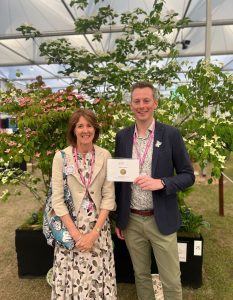 Newby Hall has won a prestigious gold medal at the RHS Chelsea Flower Show (20-24 May) for a North Yorkshire-inspired plant display – its first ever at the world’s most famous horticultural event.
 This September, Newby Hall will also host the popular Harrogate Autumn Flower Show from 19–21 September. Newby Hall & Gardens are open to the public from April to September, welcoming over 120,000 visitors annually. With its rich history, award-winning gardens, and vibrant programme of events, Newby continues to inspire gardeners and plant lovers from around the world.