One of the world’s most spectacular collections ofNerine sarniensis, also known asJewel Lilies, will sparkle into bloom at Exbury Gardens in Hampshire this autumn, offering visitors a rare botanical treat.
From1 October to 2 November 2025, theFive Arrows Galleryat Exbury will be transformed by a glittering showcase of these autumn-flowering bulbs. Part of a historic collection begun over a century ago by banker and horticulturalistLionel de Rothschild, the display now features over900 varietiesin a dazzling array of colours, from fiery orange, scarlet and white to more recent additions in pinks, purples, mauves, bronzes and copper. Their petals are flecked with gold or silver crystalline ‘dust’, making them glisten in the autumn light.
Originally discovered onTable Mountainin South Africa, Jewel Lilies have become a much-loved feature of Exbury’s seasonal highlights and a testament to the Rothschild family’s enduring horticultural legacy.Many of these rare and delicate plants will also be available to purchaseduring the exhibition.
Admission to the Nerine Exhibition is included with entrance to Exbury Gardens, the renowned 200-acre woodland garden in the New Forest. Alongside the nerinecollection, visitors can enjoy theNational Collections of Nyssa and Oxydendrum plus more than450 varieties of Acers, ensuring displays of gorgeous autumn colour throughout the grounds, as well as the Rhododendron Line steam railway
Opening times: Daily from 10am to 5.30pm Exhibition open: 1 October – 2 November 2025, 10am – 5pm Location: Five Arrows Gallery, Exbury Gardens, Hampshire Website: www.exbury.co.uk
ENDS
For further information or images, contact PR Emma Mason on 07762 117433 emma@emmamasonpr.co.uk
Notes for editors:
Exbury Gardens, located in the New Forest near Southampton, is open daily from 10am – 5.30pm. www.exbury.co.uk Thanks to its unrivalled collection of rhododendrons, azaleas and camellias, Exbury Gardens is famed for its riot of spring colour, as well as a vast array of beautiful, mature rare trees. Over recent years the Hampshire garden has been expanded for all-season interest with areas designed to show off summer and autumn ‘flower power’, as well as an extension of its 1 ½-mile Rhododendron Line steam railway.
Admission prices – to season close, £14 standard adult and £6 child. Under 3s Free. Family tickets (2 adults + 2 children) £38 (July-November).
From lush cinematic landscapes to gardens supplying fresh produce to local food banks, urban hidden gems, and even a garden-turned-catwalk, a diverse range of special green spaces will open to the public this year through Scotland’s Gardens Scheme (SGS).
The long-established charity propagates a collection of over 370 unique garden listings, including 53 new gardens signed up this year. This brings the total number of participating gardens to over 400, with 244 charities and local good causes selected for support by garden owners.
The charity raised just under £400,000 through garden open days in 2024, with around £220,000 directly benefitting 240 charities and local good causes chosen by garden owners. A further £22,000 was donated to each of SGS’s core charities – Maggie’s, the Queen’s Nursing Institute Scotland and Perennial, and the charity also awarded bursaries totaling £7,500 to Scottish horticulturists, through its Cattanach Award, which will be launched again for 2025.
The SGS open gardens 2025 programme includes gardens of all shapes, sizes, situations and interest such as:
2 Durnamuck in the north west of Scotland, recently featured on Monty Don’s British Gardens, a wonderful lochside croft garden
Carolside garden in the Scottish Borders with its glorious rose-filled elliptical walled garden, which featured on Netflix’s The Buccaneers
Drummond Castle gardens, one of Scotland’s most impressive formal gardens dating back to the 17th century, famous for its appearance in the ‘Outlander’ TV series and as the venue for Dior’s first Scottish fashion show in 2024
2 Durnamuck
Other highlights for 2025 include:
Gardens for community and educational benefit – Scotland’s Rural College joins SGS for the first time, with the staff and students of Oatridge College in Broxburn opening their garden on campus, and their colleagues at the Edinburgh campus now also planning to join in next year. Also welcomed back is The Biblical Garden in Elgin, which is used by the horticulture students of UHI Moray (University of Highlands & Islands).
A series of community gardens in the small town of Beith in Ayrshire will be opening for the first time, while the garden at Bannockburn House in Stirlingshire includes a kitchen garden which supplies fruit and vegetables to two local food banks and even includes an apiary.
Gardens for Wildlife & Environment – The inclusion of gardens with an environmental focus continues to be a growing trend and examples include: Archerfield Walled Garden in East Lothian with a new water-saving garden area featuring drought-tolerant species in shades of blue, rust and orange, while Lindisfarne garden in Moray includes a pond and rain garden fed by run-off from the roof and a wildflower meadow left to set seed for the birds, plus a shed featuring a green roof.
Also in East Lothian, Papple Steading features a meadow planted with Scottish native wildflowers, said to be one of the largest of its kind in Scotland, and sown with a wildflower and grass mix from Scottish wildflower seed specialist Scotia Seeds, including species such as yellow rattle, knapweed, ox-eye daisies, selfheal, yarrow, lady’s bedstraw, cowslip and quaking grass, among others. Laura’s Wood in Orkney has a half-acre sown with bird seed mix to feed the wild birds in Orkney’s inhospitable northern environment, demonstrating how garden owners are determined to support their local wildlife.
Ferneries – Ascog Fernery on Bute returns to SGS after a few years’ absence; this is a fascinating, enchanting and well-stocked subterranean Victorian fernery topped with an ornamental ‘terrarium-like’ roof, in the grounds of Victorian Ascog House, and including a 1000-year-old King Fern. Other ferneries can be seen at SGS regulars Hospitalfield House garden where there is a newly restored fernery and Benmore Botanic Garden, a beautiful Victorian structure set into the rocky cliffs above the garden.
Small but mighty gardens – welcoming our Instagram community – We’re welcoming three new small but mighty city gardens this year showing that small can also be beautiful, from gardeners with an Instagram following. Doctor Libby Webb’s small, terraced garden in Edinburgh has been re-designed from a lawned space used by a growing family into a stunningly beautiful haven for plants, people and pets with curved paths and generous planting. Follow her inspirational Instagram account @docleaves.
Writer and presenter Helen Cross will open her family-friendly garden in the southside of Glasgow; her garden includes raised beds for productive veg growing, feeding her passion for cooking and gardening with children, as seen in her book Grow, Cook, Inspire. Follow her @growcookinspire. Also in Edinburgh, garden coach Elisabeth Quinn, on Instagram @the_joyful_garden_ shares her tips on how to use a small city garden to create a garden that is at once family friendly and beautiful.
Post-industrial spaces – This year, SGS visitors can explore the New Lanark Roof Garden which returns after a break. Created on the 9,000 square feet of roof on one of the New Lanark mill buildings, the Roof Garden is the largest of its kind in Scotland. The garden’s patterns of gentle curves and swirls, reflect the turning arc of the great waterwheels which once powered the cotton-mills, and the flowing lines of the threads moving through the historic machinery as the yarn was spun, twisted, wound, and woven. The garden is the work of garden designer Douglas Coltart and is now maintained by New Lanark volunteers. In the heart of urban Glasgow, the SWG3 Community Garden sits behind SWG3, a high-profile events venue, on what was formerly derelict land between two railway lines. Now, it’s a delightful secret garden populated with trees, grasses, shrubs and perennials with wide paths curving through the beds. Apart from the interesting planting, this garden, designed by the horticulturist and garden designer Jeremy Needham, has beehives and two different heights of raised beds which are used by the local community as allotments.
Gardyne Castle
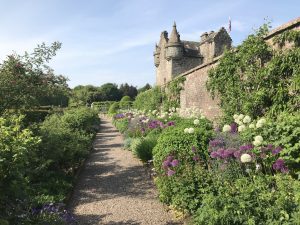
New gardens or returning after a break – Gardyne Castle garden in Angus opens on 21 June, a rare chance to see this enchanting and romantic garden created by the owners over the past 21 years. The garden includes a gorgeous and colourful long double border, herbaceous planting, roses, peonies and lavender, as well as a formal knot garden with yew topiaries and specimen trees complementing a castle that dates back to the 16th century in parts. Further south in the Scottish Borders in Berwickshire, The Walled Garden at the Hugo Burge Foundation opens for the first time with SGS on Fridays in July and August (booking essential). A recently redeveloped walled garden in the grounds of the Marchmont Estate, the garden is designed to inspire creativity as part of the Hugo Burge Foundation, a newly formed arts charity. The garden contains herbaceous borders, a kitchen garden, a colonnade, wildflower meadows, cut flower borders, a sculpture collection and newly restored Mackenzie and Moncur glasshouses.
Glenkindie House in the Strathdon area of Aberdeenshire, is a 16th-century castle remodeled in the 1900s. The walled gardens are laid out in the Victorian Arts & Crafts style with herbaceous borders, a magnificent rhododendron shrubbery, specimen trees and rose beds. There is a fine collection of 19th-century yew topiary depicting teddy bears, chess pieces and characters from Alice in Wonderland. Visitors can also enjoy a stroll around the pond to view the 17th-century dovecot. Glenkindie House has open days in May and August and is famous for its sumptuous teas and strawberry tarts.
Gledenholm garden in Ae village, in Dumfriesshire, has been created by the owner over the past 20 years largely through his passion for propagating plants, which he also generously donates to many SGS plant sales, as well as contributing his top tips for propagation to the SGS blog, to inspire others.
2 Strathview in Conon Bridge near Inverness is a medium-sized garden with mature apple trees and a shady maze of paths through beds packed with perennials sloping down to sea level where there are plenty of birds on the estuary to view. Featuring a small greenhouse, and even a steam model railway which works if weather allows. There are a couple of water features fed by rainwater, leading to a small deep pond. Stunning panoramic views across the Cromarty Firth seen from a ‘food forest’, with fruit trees growing on a set of home designed arches, runner beans, strawberries and apple trees.
Groups & Villages – Visiting a group or village opening remains extremely popular with visitors with the opportunity to view a variety of different sizes and styles of gardens, all showcasing the passion of the garden owners, all on one day. This year there are 24 SGS group openings around Scotland this year, with highlights including:
Gifford, a traditional estate village a short distance from Edinburgh in East Lothian, which includes two stunning large-scale gardens at Broadwoodside (seen on Monty Don’s British Gardens in January 2025) and Gifford Bank, along with a variety of lovely village gardens – 22 June.
Lanark Town Gardens are new for 2025, opening on 13 July with six gardens in the Waterloo Road area of Lanark town. Highlights include a miniature orchard, an extensive rock garden with a collection of alpines, a colourful partially walled garden with a focus on wildlife and a remodeled garden full of interest and surprise. Homemade teas can be enjoyed in the colourful surrounds of Lanark Bowling Club where there will also be the opportunity for all visitors to enjoy a game.
Muckhart Open Gardens in Perthshire are opening on the weekend of 31 May and 1 June with a collection of gardens in and around the Pool o’Muckhart and Yetts o’Muckhart, some of which have not opened previously. A small and very charming village, Muckhart boasts an enchanting variety of cottage and informal gardens displaying some of the best and most thoughtfully considered aspects of amateur gardening in this part of Scotland. From wildlife-friendly gardens and magnificent trees, to beautiful and constantly evolving gardens where paths meander through terraced beds and ponds, and pocket-sized cottage gardens.
Special events – Dalswinton Mill in Dumfriesshire opens on 10 August. The garden of Colin Crosbie, a former Curator at RHS Wisley, the garden is set on both sides of the Pennyland Burn which flows through the middle and the garden includes the owner’s growing collection of specimen plants, and the opening will include a mini plant fair, with music, stalls, talks and horticultural demonstrations. Teasses Garden in Fife will host two special events for SGS this year; an enchanting candlelit snowdrop walk on 21 February and a Summer Solstice evening guided tour of the garden accompanied by the Estate Manager and former Head Gardener, on 18 June.
Music in the garden – A number of garden openings include music in the garden as part of their open day, including the No Strings Attached wind band at Redcroft in Edinburgh, The South West Scotland Piping & Drumming Academy Cowhill Tower, Dumfriesshire, pipe bands at Douneside House in Aberdeenshire and at Norton House on Deeside.
And finally, a new District Organiser in Orkney who has come all the way from the US, has got to know people on the islands by persuading them to open their gardens, resulting in a collection of new and returning Orkney gardens.
“It’s wonderful to be able to present yet another exciting programme of open days to the public and we can’t wait to welcome everyone to our 2025 season. Our garden owners and volunteers are truly inspiring people, and we are so grateful to them for their generosity in sharing their passion for plants and gardening knowledge to inspire many others. We have a passionate following of regular visitors, and we hope to welcome many, many more people new to Scotland’s Gardens Scheme this year, to enjoy the delights of open gardens. Visiting open gardens is a wonderful way to do your bit for charity, the chance to learn something new about gardening and be inspired, to meet other garden lovers and to reap the benefits of being outside in a beautiful environment. Please join us in 2025 and help us raise funds for charities and local good causes again this year.” said Liz Stewart, Scotland’s Gardens Scheme Chief Executive.
For full details of gardens open for charity, explore the SGS website or buy the 2025 guidebook, available on the website at scotlandsgardens.org.
Scotland’s Gardens Scheme supports the opening of gardens throughout Scotland to the public, raising funds for charity through garden gate tickets, plant sales and teas. Most are privately owned and are normally inaccessible to the public at other times. 60% of funds raised at each garden opening may go to garden owner’s charity of choice with the remainder being donated to Scotland’s Gardens Scheme and its beneficiary charities, Maggie’s, the Queen’s Nursing Institute Scotland and Perennial. Scotland’s Gardens Scheme is powered by volunteers and has been raising funds for charity through garden openings since 1931.
Full garden details can be found at scotlandsgardens.org. Garden and charity highlights can also be found on:
· DragonflyWeek (16-24 July) celebrates the importance of these wonderful creatures and the simple changes homeowners can make to attract them into their own back gardens
A five-year project to attract more dragonflies to a south coast tourist attraction has been a soaraway hit with more than double the number of species recorded at a ‘DragonflyHotspot’ pond in Exbury Gardens – and visitors are being urged to install their own wildlife ponds too.
Dragonflies are crucial bio-indicators of the health of the UK’s rivers, canals and ponds but modern-day development, drainage and pollution have threatened numbers.
Designed with the help of the UK’s leading dragonfly experts,an existing large ornamental pond at Exbury was adapted for the insects with dragonfly-friendly plants. The aim is to inspire visitors to attract dragonflies into their own gardens.
New data shows since creating this dragonfly-friendly habitat, Exbury is now attracting more than double the number of dragonfly species compared to previous years. Twenty-two types of dragonfly and damselfly have been recorded including the Emperor, Golden-ringed Dragonfly, Migrant Hawker and the Downy Emerald.
Last summer Exbury was granted Hotspot status by the British Dragonfly Society, recognising it as one of the best places in the UK to see these dazzling creatures. During DragonflyWeek (16-24 July 2022), volunteers from the charity will be on hand at Exbury to help visitors identify dragonflies and give them tips on how to attract them to their gardens.
Tom Clarke, head gardener at Exbury Gardens, said: “Although our pond is on a large scale here at Exbury, many of the changes we’ve made to attract dragonflies can be done on a much smaller scale in your own back garden. By installing a tiny wildlife pond, adding some plants for the dragonfly larvae and adults to thrive on, and making sure the water is clear, you’ll be amazed at how quickly your pond will attract all sorts of wildlife, including dragonflies. You really don’t need lots of space or a big budget.”
Experts and dragonfly ambassadors Ruary Mackenzie Dodds and Kari de Koenigswarter have helped Exbury with the project. Ruary said: “We began work on creating an ideal habitat for dragonflies in 2017. Before that, just ten types had been recorded at the pond. Now we have recorded 22! It just shows what putting in three sorts of aquatic plants – oxygenators, surface-coverers and tall-stemmed plants – can do. Plenty of sunshine and very few fish helps too! And these insects are not only stunningly beautiful, they also tell us a great deal about water quality.”
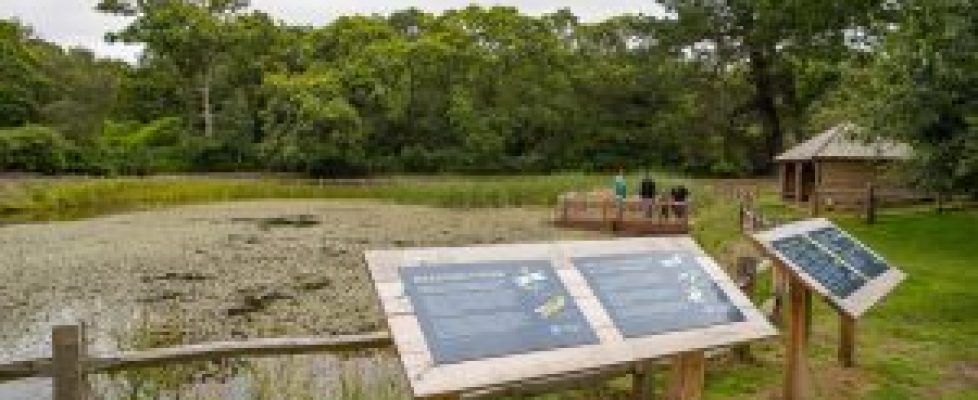
Exbury’s Dragonfly Pond includes floating pontoons so visitors can get close to the wildlife action, identification boards and an outdoor shelter for local groups and school children. Its popular Rhododendron Line steam railway even has a Dragonfly Halt platform to make it easy for more people to explore the area.
Exbury Gardens is one of seven Dragonfly Hotspots in England, and the first in Hampshire. DragonflyHotspots are special places, carefully chosen by the British Dragonfly Society because they support a good variety of dragonfly and damselfly species, are easy to access, and can provide opportunities for local communities to get involved with dragonfly conservation and events.
Exbury Gardens, located in the New Forest near Southampton, is open daily from10am – 5.30pm. Arrival time slots must be booked online in advance at www.exbury.co.uk Thanks to its unrivalled collection of rhododendrons, azaleas and camellias, Exbury Gardens is famed for its riot of spring colour, as well as a vast array of beautiful, mature rare trees. Over recent years the Hampshire garden has been expanded for all-season interest with areas designed to show off summer and autumn ‘flower power’, as well as an extension of its 1 ½-mile Rhododendron Line steam railway.
British Dragonfly Society – Over the last 60 years we have witnessed the extinction of two species of dragonfly in the British Isles (Norfolk Damselfly Coenagrion armatum and Orange-spotted Emeral Oxygastra curtisii ). At least a third of the remainder are considered to be rare, localised and have specialised habitat requirements. The British Dragonfly Society (BDS), set up in 1983, is the world’s largest organisation dedicated to the study and conservation of dragonflies, damselflies and their wetland habitats.
It is a volunteer-led membership organisation, carrying out and supporting research on dragonflies, and leading practical conservation, education and public engagement activities to teach people about the importance of dragonflies and their wetland habitats.
The greatest threats to dragonfly populations come from habitat destruction and fragmentation, pollution, inappropriate habitat management, alteration of site hydrology and the impacts of climate change. It works hard to research and identify changes in populations, as well as to advise on creating and managing suitable habitats, and to educate and engage the wider public to engender greater care for these charismatic insects.
Dragonfly facts:
They have been around for over 300 million years, way before the dinosaurs existed.
They can indicate the quality of both aquatic and terrestrial habitats thanks to their fascinating life cycle.
They are climate change indicators, as they will respond to air and water temperature changes by expanding or contracting their range.
They have a 95% success rate when hunting, making them one of the most efficient hunters on the planet.
Some larger dragonflies have been recorded flying up to 30mph
Newby Hall & Gardens reopens to the public on 1 April 2021 with Covid safety measures1 in place
First phase of historic rock garden restoration now complete
Dahlia bed revamp with 21st century colour twist
Famous double herbaceous border in full bloom after lockdown
Harrogate Autumn Flower Show to be held at Newby Hall 17-19 September
When visitors return to one of the north’s most famous gardens in April, they will get the first rare-plant-filled glimpse of the major restoration of a historic Edwardian rock garden – thought to be one of the largest of its kind in the UK.
Newby Hall’s expansive rock garden2, boasting a waterfall, hidden nooks and even a miniature aquaduct, is undergoing a five-year refurbishment and the initial phase is now complete. Scores of new rare and unusual plants, many of which will be in full spring bloom when Newby Hall opens for the season, have replaced overgrown foliage in the iconic garden, and large architectural rocks unearthed.
Dating back to pre-WW1 and measuring over an acre, it was originally designed with the help of visionary Edwardian plantswoman Ellen Willmott. But a century later, many of its shrubs, plants and trees had outgrown the space, and specialist work by the garden team is restoring it to its former glory.
Also getting a 21st century revamp are the dazzling dahlia beds at Newby Hall with dozens of new varieties getting their first showing this year in an eye-popping, contemporary colour palette. Delicate fritillaries, oxslips and tulips have been planted under apple and quince trees in the Orchard Garden to give a full-on, late spring display, and Newby Hall’s famous 172 metre-long double herbaceous border is on track to give a real flower-powered punch all season long.
For the first time, the popular three-day Harrogate Autumn Flower Show will be held in the grounds of Newby Hall (17-19 September) and show goers will get free access to the gardens as part of their admission ticket. The event is famed for its giant vegetable competition, the Northern Championships for the National Vegetable Society and one of the best autumn bloom displays in the UK, so both flower lovers and grow-your-own aficionados alike will get their horticultural fix. The season at Newby Hall culminates with Apple Day and the Apple Throwing Championships on 3 October.
Other garden gems at Newby Hall include a national Cornus collection, a stunning autumn garden packed with late-flowering salvias, magnificent magnolias in the Tropical Garden and a traditional sweet-smelling rose garden.
Newby Hall is a William and Mary house located between Ripon and Boroughbridge in North Yorkshire, built in the 1690s until the guidance of Christopher Wren. John Carr remodelled the house in the 18th century, with interiors by Robert Adam and furniture by Chippendale. Owner Richard Compton is the 10th generation of his family to live at Newby.
The House and Gardens are open to the public from April to September, attracting around 140,000 visitors each season. The venue boasts a restaurant, miniature railway, gift shop and plant centre, day visitor events and weddings.
The gardening team has a head gardener, 6 full time gardeners and a handful of volunteers. They care for the 25 acres of formal gardens, boasting 15 stunning ‘garden rooms’, and a further 15 acres of woodland and orchard, plus a national collection of Cornus.
Newby Hall is just a few miles from the A1(M), the main London to Edinburgh motorway. Close by are the magnificent Yorkshire Dales, North Yorkshire Moors National Parks and the historic cities of York and Ripon.
1: Covid safety measures – Visitors advised to check website for opening details as Government guidelines will need to be followed. Online ticket booking only to manage the number of visitors each day, with a limit on numbers arriving in three different arrival periods. Safety information is given to visitors at the start of their visit to ensure social distancing and staff at the visitor entrance are protected by plastic screens, as are the team at the onsite café providing take-away refreshments. Additional toilets have been opened in the gardens and a rigorous hygiene regime implemented for all outdoor areas.
2: Rock garden – Working closely with specialists Kevock Garden Plants & Design, Newby Hall’s head gardener Phil Cormie and owners Richard and Lucinda Compton, aim to transform the space to ensure it is conserved for generations of visitors to come. Unusual plants already in place include:
Rhododendron primuliflorum‘Doker-La’ – an unusual dwarf rhododendron with pink, daphne-like flowers.
Meconopsis x cookei‘Old Rose’ – beautiful poppy with erect stems of pendulous, dusky pink flowers in spring
Iris kerneriana –a lovely narrow, tidy leaved iris with delicate 40 cm long stems bearing sulphur- yellow and cream flowers.
Antirrhinum molle– most people think of snapdragons as being annuals but this one is small shrub with velvety grey leaves and large white or pink flowers.
Saxifraga ‘Nicholas’ -absolutely outstanding silver saxifrage with huge, tumbling sprays of white flowers.
Sorbus reducta– a dwarf rowan only growing up to 1.5 metres tall with berries that start red and turn pink as the autumn season progresses.
Pseudocodon convolvulaceus subsp. Forrestii –an unusual climber which gently twines through shrubs and small trees. Beautiful bell-shaped, pale blue flowers mark these plants out as a Campanula relative.
Gentiana acaulis – a spectacular rock garden plant, the Stemless Gentian throws out deep blue, trumpet shaped flowers with a spotted green throat.
Rhododendron campylogynum Myrtilloides Group – a charming dwarf species of rhododendron with beautiful thimble-shaped, nodding, plum-purple flowers.
Meconopsis ‘Huntfield’ – a beautiful variety of the Blue Poppy with a hint of purple shading the blue flowers.
The second phase of the heritage garden project is now underway with plans for an alpine lawn, New Zealand corner and revamped cascade.
NEW River Walk – learn about native trees on a woodland trail towards the Beaulieu River estuary
NEW Dragonfly Pond learning zone & Dragonfly Halt steam railway stop [2020 launch postponed by lockdown]
Spring bulb extravaganza in Daffodil Meadow and the River of Gold, plus world-famous display of camellias, azaleas and rhododendrons
Rock garden revamp and oak tree planting programme
Embrace nature and discover the magnificence of Britain’s native trees on a new woodland trail when it opens at Exbury Gardens, one of the south’s most famous gardens, this spring.
The new River Walk will allow visitors to explore previously-hidden woodland within the 200-acre New Forest garden, with glimpses of the Beaulieu River estuary. Interpretation boards will explain how to spot some of our iconic native trees. Stretching nearly half a mile past mature oaks, field maples, yews and hazels, the trail will meander from Daffodil Meadow, which is planted with thousands of the yellow spring favourites, to the stunning flower-filled Azalea Bowl.
Garden fans can also get their spring floral fix from the River of Gold, a 100,000-bulb colour burst that weaves around rare trees near Exbury House, and from acres of world-renowned Exbury camellias, rhododendrons and azaleas.
Also new for the 2021 season will be the opportunity to:
spot wildlife action at a new Dragonfly Pond1 learning zone. Designed with the help of the UK’s leading dragonfly experts, this area will boast info boards filled with dragonfly facts and take-away tips on how you can encourage these wonderful creatures into your own back garden. An existing, large ornamental pond in the gardens has been adapted for the insects with dragonfly-friendly, native aquatic and marginal plants. Also alight from Exbury’s renowned Rhododendron Line steam railway at a new Dragonfly Halt platform to explore the pond area.
check out the rare and interesting plants being given new homes in the revamped Rock Garden. First built around 100 years ago, the Rock Garden is considered to be one of the largest in Europe.
discover 30 new native oak trees planted across the garden as part of a three-year project to help restore the magnificent tree canopy.
Tom Clarke, head gardener at Exbury Gardens, said: “In 2021 we are looking forward to celebrating the beautiful, unique, natural setting of Exbury by extending access into more woodland that visitors won’t have seen before and opening up nature areas such as our new Dragonfly Pond.
“We are also investing in the garden’s legacy for future generations by planting lots of new trees to enhance biodiversity and regenerate the treeline, and adding even more rare plants and shrubs to the Rock Garden.”
Created by Lionel de Rothschild in 1919, a passionate collector of plants and a keen supporter and sponsor of the early 20th century plant hunters, Exbury Gardens has grown to become a stunning garden paradise filled with rare plants, shrubs and trees. It boasts over 20 miles of pathways and trails.
Exbury Gardens was one of the first garden attractions in the south to reopen to the public after lockdown ended and saw a boost in admission numbers over summer and autumn 2020 from visitors keen to explore the natural world in safety. It is a proud holder of Visit Britain’s ‘We’re Good To Go’ certification, showing it adheres to current Government and public health guidance.
1 – Dragonfly Pond project launch had been planned for summer 2020 but has been rescheduled for summer 2021
Exbury Gardens, located in the New Forest near Southampton, is open daily from 1 March 2021 10am – 5.30pm. Arrival time slots must be booked online in advance at www.exbury.co.uk
Thanks to its unrivalled collection of rhododendrons, azaleas and camellias, Exbury Gardens is famed for its riot of spring colour, as well as a vast array of beautiful, mature rare trees. Over recent years the Hampshire garden has been expanded for all-season interest with areas designed to show off summer and autumn ‘flower power’, as well as an extension of its 1 ½-mile Rhododendron Line steam railway.
One of the UK’s finest gardens, Newby Hall in North Yorkshire, has opened to visitors for the first time this year. The famous horticultural landmark, the current holder of the Historic Houses Garden of the Year title, should have opened in April for the 2020 season but lockdown started before the gates could open.
Owners Richard and Lucinda Compton, aided by the head Gardener Phil Cormie, have worked through the enforced two-month closure, mowing grass, planting and watering the 25 acres of gardens to make sure they are looking at their early summer best. Gates were finally opened to members of the public on Saturday (6 June).
Strict measures have been put in place to ensure visitor and staff safety. Online ticket booking only has been introduced to manage the number of visitors each day, with a limit on numbers arriving in three different arrival periods. Safety information is given to visitors at the start of their visit to ensure social distancing and staff at the visitor entrance are protected by plastic screens, as are the team at the onsite café providing take-away refreshments. Additional toilets have been opened in the gardens and a rigorous hygiene regime implemented for all outdoor areas.
“It is an overwhelming feeling of relief to see visitors back enjoying the gardens,” said Richard Compton “Visitors, and the essential income they bring, allow us to maintain the house and gardens for future generations of visitors to enjoy. It is wonderful to see people coming through the gates at Newby again.”
Stuart Gill, Commercial Director, said “The lockdown period frustratingly coincided with the sunniest ever May but we’re delighted that the easing of the lockdown measures has allowed us finally to open the gardens. We hope that the playground, railway, restaurant, exhibitions and house tours can open soon too.”
Newby Hall is one of Britain’s finest Adam Houses. Built in the 1690s by Sir Christopher Wren, it was later enlarged and adapted by John Carr and subsequently Robert Adam. Newby in the modern day is a popular visitor attraction, welcoming approximately 150,000 visitors each Opening Season.
Attractions at Newby Hall include Adventure Gardens, Gardens, Miniature Train, The Brandreth Bears and the Dollshouse Collection.
Newby Hall & Gardens, Ripon, North Yorkshire, HG4 5AJ. Telephone: 01423 322583.
Iconic New Forest woodland garden to reopen with special measures in place to keep visitors safe
Revamped Iris Garden putting on a show plus early summer floral ‘wow’ in herbaceous borders and Centenary Garden
Lots of open space and room to roam with over 20 miles of pathways
Online ticket booking only with a daily visitor limit of 500 people and time slots for entering the gardens
One of the south’s most famous gardens, Exbury Gardens in the New Forest, will be reopening its gates to the public on Saturday (30 May). With 200 acres of stunning woodland landscape to explore and even some of its world-renowned rhododendrons still in bloom, Exbury will be welcoming visitors back just as its summer flower-power season kicks off.
Special measures will be in place to keep visitors safe including online ticket booking only, a daily visitor limit of 500 people, and time slots for entering the gardens, so arrivals can be staggered.
Visitors will be treated to a riot of plant colour in the herbaceous borders near Exbury House, the recently-opened Centenary Garden gearing up for its summer floral show, a revamped Iris Garden, a new Birch Walk, swathes of beautiful landscaped woodland, over 20 miles of meandering pathways, and even some of Exbury’s famous rhododendrons putting on their last blossom of the season.
Lionel de Rothschild, chairman of Exbury Gardens Trust, said: “We have 200 acres of space at Exbury filled with the most beautiful plants and trees that look absolutely spectacular at the start of the summer, and we’re so looking forward to sharing it with our visitors again. There’s lots of room to roam and experience nature at its best, and we’re putting special protective measures in place to keep everyone safe.”
To visit Exbury, visitors can book advance tickets online and choose an arrival time for their entry to the gardens. Toilets will be open and sanitised regularly, and refreshments and sandwiches will be available to purchase Wednesday-Sunday. Steam railway trains and guided buggy tours will not be operating. Full details on how to book and tips on visiting can be found at www.exbury.co.uk.
Created by Lionel de Rothschild in 1919, a passionate collector of plants and a keen supporter and sponsor of the early 20th century plant hunters, Exbury has grown to become a stunning garden paradise filled with rare plants, shrubs and trees. Its Centenary Garden, designed by Lionel’s great grand-daughter and RHS gold medal award-winning designer, Marie-Louise Agius, opened to the public last year.
“Over the last couple of months we’ve had fun sharing Exbury virtually over our social media channels but we can’t wait for the public to come back through the gates so they can experience the gardens first-hand and in all their glory,” said Marie-Louise, who has been posting images and video of the gardens during lockdown on Exbury’s Twitter, Facebook and Instagram feeds.
Exbury Gardens, located in the New Forest near Southampton, is open daily until 1 November 2020 10am – 5.30pm. Full information at www.exbury.co.uk Thanks to its unrivalled collection of rhododendrons, azaleas and camellias, Exbury Gardens is famed for its riot of spring colour, as well as a vast array of beautiful, mature rare trees. Over recent years the Hampshire garden has been expanded for all-season interest with areas designed to show off summer and autumn ‘flower power’, as well as an extension of its 1 1/2-mile Rhododendron Line steam railway.
First time the award, sponsored by Christies, has been decided by head-to-head online public vote
Nearly a third of the votes cast were for Yorkshire’s Newby Hall
Yorkshire’s Newby Hall is officially the nation’s favourite country house garden after scooping nearly a third of the votes in the first ever public online poll for the Historic Houses Garden of the Year.
Newby’s magnificent 40 acres of gardens and woodland triumphed against seven other leading gardens for the 2019 title in a head-to-head contest, sponsored by Christies. The prestigious Historic Houses award was redesigned and relaunched this year, featuring a shortlist for the first time since its creation in 1984. Previous winners were encouraged to participate – Newby Hall won in 1986 and so also becomes the first garden to win the title twice.
Newby’s much-loved gardens, owned by Richard and Lucinda Compton, are visited by around 140,000 people every year and often feature on film and TV. They are located at the gateway to the Yorkshire Dales and are filled with rare and beautiful plants and shrubs in 14 stunning garden ‘rooms’, as well as boasting one of the longest double herbaceous borders in the UK, two heritage orchards and acres of woodland.
Lucinda Compton said: “We are over the moon to win this award, particularly as the votes were cast by members of the public. To be the first garden to have won it twice makes it even more special. Our team of gardeners should feel very proud as they work tirelessly in all weathers to keep Newby always looking first class.”
Ben Cowell, Director General, Historic Houses, said: “Newby Hall is one of Yorkshire’s most popular visitor attractions, and is now officially the nation’s favourite garden! Historic Houses’ places tend to remain lived-in, family homes, which means that they are able to evolve and adapt over time. We should not be surprised that Newby has become the first garden to win this prestigious award twice – the changes introduced by owners Richard and Lucinda Compton have made Newby one of the country’s finest pleasure grounds.”
Over 6,000 votes were cast this year for the Historic Houses Garden of the Year, a significant increase in the number of votes from previous years. Newby Hall received 1,982 votes in total.
Already a star of film and screen productions such as Peaky Blinders, Victoria, Gentleman Jack and the ABC Murders, Newby Hall will step further into the spotlight next year when the popular three-day Harrogate Autumn Flower Show permanently moves site to its grounds. Newby Hall is also currently on the search for a new head gardener.
Newby Hall is a William and Mary house located between Ripon and Boroughbridge in North Yorkshire, built in the 1690s until the guidance of Christopher Wren. John Carr remodelled the house in the 18th century, with interiors by Robert Adam and furniture by Chippendale. Owner Richard Compton is the 10th generation of his family to live at Newby. The House and Gardens are open to the public from April to September, attracting around 140,000 visitors each season. The venue boasts a restaurant, miniature railway, gift shop and plant centre, day visitor events and weddings. The gardening team has 6 full time gardeners and a handful of volunteers. They care for the 25 acres of formal gardens and a further 15 acres of woodland and orchard, plus a national collection of Cornus. Newby Hall is just a few miles from the A1(M), the main London to Edinburgh motorway. Close by are the magnificent Yorkshire Dales, North Yorkshire Moors National Parks and the historic cities of York and Ripon.
Historic Houses is a not-for-profit organisation representing more than 1,650 of the UK’s independently owned historic houses, castles and gardens. Around 500 of these properties open their doors to visitors for days out, special tours, school visits, film locations, weddings and events, or as memorable places to stay. Members range from iconic stately homes such as Blenheim Palace, Highclere Castle, Castle Howard, Knebworth House, Longleat and Burghley House, to more intimate houses such as Traquair in Scotland, Treowen in Wales and Belle Isle in Northern Ireland. Most are still private family homes. The association was established in 1973 to help owners conserve these wonderful places in the interests of the nation and carries out lobbying, advisory and marketing work on behalf of member properties. Just over 320 houses and gardens take part in a member-access scheme, admitting over 50,000 card-carrying Historic Houses members for free.
-Luxury Norwegian Log cabins where you can relax in nature under the stars-
A luxury lakeside leisure development, aimed at the booming staycation market, has opened near Gamlingay in south Cambridgeshire. Boasting three bespoke lodges built by Norwegian Log, Cambridgeshire Lakes promises a get-away-from-it-all location with 21st century comforts.
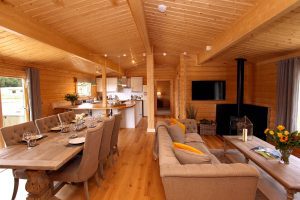
Inside one of the luxury lodges at Cambridgeshire Lakes
With hot tubs with gorgeous countryside views, lavish interiors in three spacious log cabins and a tranquil waterside setting with wild swimming, the new development is sure to be a big hit with visitors wanting weekends away, as well as those after a relaxing, longer break.
Owned by the Alexander family, Cambridgeshire Lakes sits on rolling farmland once held by the Downing family, famed for building Downing Street in London and the founding of Downing College in Cambridge. The seven-acre development is the farm diversification-brainchild of 30-year-old Charlie Alexander, working alongside luxury log cabin company Norwegian Log.
Charlie said: “Within two hours you can reach lots of cities by car from here, so it’s perfectly situated. We’re confident we can easily tap into the luxury staycation market and corporate events.”
Natural springs on the land were used to create the lake as the eye-catching focus for the small development. Charlie then teamed up with Norwegian Log’s design team to create a bespoke look and layout for the three new high-end lodges. Construction started on site in March and by May the build was complete. “I had done a lot of research on log cabins. Norwegian Log was competitive on price and offered the high quality product that I wanted,” Charlie said. “I also wanted to flex the building to suit the landscape, so slightly lower windows to give a better view of the lake and a larger, open-plan living and kitchen space. Norwegian Log was very happy to help me with that.”
Left to right – Nick Forrester of Norwegian Log and Charlie Alexander of Cambridgeshire Lakes
Nick Forrester, director at Norwegian Log, said: “From the outset, Charlie wanted to create a premium holiday development and opting for our high quality log cabins, he’s achieved this. The quality of the fit-out is excellent and perfect for his target market.”
Finished to an exceptionally high standard, each lodge has two super-king bedrooms with en-suite bath and shower rooms. An open plan living area with log burner also houses a high-spec kitchen. Outside, each lodge has a private hot tub and panoramic views from the spacious decking area. Guests can also enjoy wild swimming in the clear lake, which is strikingly blue thanks to the local blue clay soil.
The lake at Cambridgeshire Lakes
The lodges are open now for bookings. “The high quality wood gives that luxury look and really makes you feel like you are on holiday, like a traditional ski chalet, but with wonderful views of the rolling Cambridgeshire countryside,” said Charlie.
Notes for editors: Since the 1980s, Norwegian Log Buildings has been erecting buildings across the UK. It has supplied over 1,000 buildings to private clients, companies, holiday parks, local authorities, charities and public bodies. With a 30-strong team, the firm is based in Reading, Berkshire.
Contains information related to marketing campaigns of the user. These are shared with Google AdWords / Google Ads when the Google Ads and Google Analytics accounts are linked together.
90 days
__utma
ID used to identify users and sessions
2 years after last activity
__utmt
Used to monitor number of Google Analytics server requests
10 minutes
__utmb
Used to distinguish new sessions and visits. This cookie is set when the GA.js javascript library is loaded and there is no existing __utmb cookie. The cookie is updated every time data is sent to the Google Analytics server.
30 minutes after last activity
__utmc
Used only with old Urchin versions of Google Analytics and not with GA.js. Was used to distinguish between new sessions and visits at the end of a session.
End of session (browser)
__utmz
Contains information about the traffic source or campaign that directed user to the website. The cookie is set when the GA.js javascript is loaded and updated when data is sent to the Google Anaytics server
6 months after last activity
__utmv
Contains custom information set by the web developer via the _setCustomVar method in Google Analytics. This cookie is updated every time new data is sent to the Google Analytics server.
2 years after last activity
__utmx
Used to determine whether a user is included in an A / B or Multivariate test.
18 months
_ga
ID used to identify users
2 years
_gali
Used by Google Analytics to determine which links on a page are being clicked
30 seconds
_ga_
ID used to identify users
2 years
_gid
ID used to identify users for 24 hours after last activity
24 hours
_gat
Used to monitor number of Google Analytics server requests when using Google Tag Manager