One of the world’s most spectacular collections ofNerine sarniensis, also known asJewel Lilies, will sparkle into bloom at Exbury Gardens in Hampshire this autumn, offering visitors a rare botanical treat.
From1 October to 2 November 2025, theFive Arrows Galleryat Exbury will be transformed by a glittering showcase of these autumn-flowering bulbs. Part of a historic collection begun over a century ago by banker and horticulturalistLionel de Rothschild, the display now features over900 varietiesin a dazzling array of colours, from fiery orange, scarlet and white to more recent additions in pinks, purples, mauves, bronzes and copper. Their petals are flecked with gold or silver crystalline ‘dust’, making them glisten in the autumn light.
Originally discovered onTable Mountainin South Africa, Jewel Lilies have become a much-loved feature of Exbury’s seasonal highlights and a testament to the Rothschild family’s enduring horticultural legacy.Many of these rare and delicate plants will also be available to purchaseduring the exhibition.
Admission to the Nerine Exhibition is included with entrance to Exbury Gardens, the renowned 200-acre woodland garden in the New Forest. Alongside the nerinecollection, visitors can enjoy theNational Collections of Nyssa and Oxydendrum plus more than450 varieties of Acers, ensuring displays of gorgeous autumn colour throughout the grounds, as well as the Rhododendron Line steam railway
Opening times: Daily from 10am to 5.30pm Exhibition open: 1 October – 2 November 2025, 10am – 5pm Location: Five Arrows Gallery, Exbury Gardens, Hampshire Website: www.exbury.co.uk
ENDS
For further information or images, contact PR Emma Mason on 07762 117433 emma@emmamasonpr.co.uk
Notes for editors:
Exbury Gardens, located in the New Forest near Southampton, is open daily from 10am – 5.30pm. www.exbury.co.uk Thanks to its unrivalled collection of rhododendrons, azaleas and camellias, Exbury Gardens is famed for its riot of spring colour, as well as a vast array of beautiful, mature rare trees. Over recent years the Hampshire garden has been expanded for all-season interest with areas designed to show off summer and autumn ‘flower power’, as well as an extension of its 1 ½-mile Rhododendron Line steam railway.

Admission prices – to season close, £14 standard adult and £6 child. Under 3s Free. Family tickets (2 adults + 2 children) £38 (July-November).
• Free access for local RareDementia Support members, funds being raised on the garden for The National Brain Appeal, who fund the service
A triple award-winning show garden, which will benefit local people diagnosed with raredementias and their families, has been officially opened at Exbury Gardens.
The National Brain Appeal’s beautiful ‘Rare Space’ garden, designed by Charlie Hawkes (pictured below) and now sited opposite the Five Arrows Gallery at the famous New Forest visitor attraction, was opened by Helena Clarke who lives with the condition posterior cortical atrophy (PCA). Also at the launch was Peter Jones from Fareham who has been diagnosed too with PCA. This affects the area of the brain that deals with visual processing.
Designer Charlie Hawkes on the Rare Space Garden at Exbury Gardens – photo credit Cathryn Baldock
Local families who are members of RareDementia Support are being given free access to the garden at Exbury. A digital donation point at the garden allows money to be raised for The National Brain Appeal, which funds the service; and information boards and leaflets give more details about raredementias and advice on how to seek support. Staff at Exbury Gardens have also undertaken dementia awareness training.
The Project Giving Back-funded Rare Space Garden won three awards at RHS Chelsea Flower Show, including a gold, and is designed for those living with raredementias, particularly visual and spacial forms of the disease. It will eventually be located at the world’s first RareDementiaSupport Centre in London but, whilst The National Brain Appeal raises the estimated £7m needed to create this Centre – expected to open in 2024/25 – the garden has been temporarily located in Hampshire for Exbury’s visitors to enjoy, and to raise awareness of these life-changing neurological conditions, which are often misdiagnosed.
RDS supports people living with seven forms of raredementia; these can strike at a young age, may be directly inherited, and often affect skills other than memory, such as vision, language, behaviour and movement. It is thought that around 47,000-142,000 people in the UK are living with a less common form of dementia but reliable statistics are hard to find due to frequent misdiagnoses. The new Centre will be a state-of-the-art home for the service, bringing people affected by these conditions together with experienced healthcare professionals.
Following diagnosis, many find that existing health, social and voluntary services do not cater adequately for their individual needs, and established dementia support groups are not particularly relevant to their situation. Members of these groups can often be significantly different to them in terms of age, life situation and symptoms. 30% of people living with a raredementia initially receive an incorrect diagnosis and there is a widespread lack of understanding and a shortage of dedicated resources to support those affected.
Theresa Dauncey, chief executive of The National Brain Appeal, said: “It is wonderful to see The National Brain Appeal’s Rare Space Garden in its new home at Exbury Gardens and looking as splendid as it did at RHS Chelsea Flower Show. We are incredibly grateful to Marcus Agius and everyone at Exbury Gardens for hosting our garden, giving so many more people the opportunity to see it and to learn more about raredementias, and, of course, to Project Giving Back for making all of this possible.”
Exbury Gardens’ chairman Marcus Agius said: “One of the purposes of the RareDementia Support Centre will be to educate people about these unusual conditions, not just sufferers and their families and carers, but also members of the medical profession. As such, the Rare Space Garden fits well with the educational objects of the Exbury Gardens charitable trust. We are simply delighted to be hosting it until the new centre is built.”
The Rare Space Garden was created with the input and collaboration of those affected by visual-led dementias, and was designed as a space to foster autonomy and hope. It offers a balance between exploration and calm navigation. Subtly coloured planting has been chosen to minimise sensory disruption. A level, wide path weaves simply through the garden, offering brightly coloured, easily found seating areas and sheltered spaces along the way, for independent wayfinding. Interpretation boards outline the significance of key features within the space and explain how those with raredementias and their families can seek support.
The National Brain Appeal – PR Manager, Marie Mangan – 07812 124092 marie.mangan@nhs.net
Notes for editors
Exbury Gardens, spread over 200 acres, is a calm and beautiful oasis with tranquil ponds surrounded by rare plants, trees and shrubs. It was created by Lionel de Rothschild in 1919, a passionate collector of plants and a keen supporter and sponsor of the early 20th century plant hunters, and has grown to become a stunning garden paradise. It boasts over 20 miles of pathways and trails and is located in the New Forest about 15 minutes from the M27. Over recent years the Hampshire garden, famed for its spring colour, has been expanded for all-season interest with areas designed to show off summer and autumn blooms, as well as an extension of its 1 ½-mile Rhododendron Line steam railway. Exbury Gardens, located in the New Forest near Southampton, is open daily 10am – 5.30pm. Arrival time slots must be booked online in advance at www.exbury.co.uk
About The National Brain Appeal (registered charity number 290173) – Dedicated to improving the lives of people affected by neurological conditions, The National Brain Appeal funds pioneering research, innovative treatments and world-class facilities at The National Hospital for Neurology and Neurosurgery and the UCL Institute of Neurology in Queen Square, London. The hospital is the UK’s leading centre of excellence for treating diseases of the brain, spine and the nervous system − such as brain tumours, epilepsy, stroke, dementias, MS, Parkinson’s disease and motor neurone disease. nationalbrainappeal.org
The charity funds RareDementia Support (RDS), a service that provides information, advice and support to people and their families living with raredementias and is currently fundraising for the world’s first RareDementia Support Centre, part of the UCL Queen Square Institute of Neurology, to provide guidance, support and education, as well as being a space for research, artistic and cultural activities. raredementiasupport.org
Charlie Hawkes is an award-winning landscape designer based in the UK who won a gold medal at the 2022 Chelsea Flower Show for his Wilderness Foundation UK Garden, as well as a gold at the 2023 show. He has a master’s in landscape architecture from the Edinburgh College of Art. His experience includes working in Japan at Dan Pearson’s Tokachi Millennium Forest, an estate placement at the iconic Lutyens-build house, Great Dixter and a season working at luxury hotel, Gravetye Manor in West Sussex. As a result of his knowledge of design and gardening, he strives to create places that have an atmosphere that reflects the unique nature of each landscape.
Project Giving Back (PGB) is a unique grant-making charity that provides funding for gardens for good causes at the RHS Chelsea Flower Show. PGB was launched in May 2021 in response to the Covid-19 pandemic and its devastating effect on UK charitable fundraising. PGB has funded a total of 15 gardens at RHS Chelsea Flower Show in 2023 and intends to fund up to 42 gardens at the show from 2022 – 2024. It was established with funding from two private individuals who are RHS Life Members and keen gardeners. They wish to remain anonymous. PGB will help UK-based good causes recover from the unprecedented effects of the global pandemic by giving them an opportunity to raise awareness of their work for people, plants and the planet at the high-profile RHS Chelsea Flower Show. www.givingback.org.uk
· DragonflyWeek (16-24 July) celebrates the importance of these wonderful creatures and the simple changes homeowners can make to attract them into their own back gardens
A five-year project to attract more dragonflies to a south coast tourist attraction has been a soaraway hit with more than double the number of species recorded at a ‘DragonflyHotspot’ pond in Exbury Gardens – and visitors are being urged to install their own wildlife ponds too.
Dragonflies are crucial bio-indicators of the health of the UK’s rivers, canals and ponds but modern-day development, drainage and pollution have threatened numbers.
Designed with the help of the UK’s leading dragonfly experts,an existing large ornamental pond at Exbury was adapted for the insects with dragonfly-friendly plants. The aim is to inspire visitors to attract dragonflies into their own gardens.
New data shows since creating this dragonfly-friendly habitat, Exbury is now attracting more than double the number of dragonfly species compared to previous years. Twenty-two types of dragonfly and damselfly have been recorded including the Emperor, Golden-ringed Dragonfly, Migrant Hawker and the Downy Emerald.
Last summer Exbury was granted Hotspot status by the British Dragonfly Society, recognising it as one of the best places in the UK to see these dazzling creatures. During DragonflyWeek (16-24 July 2022), volunteers from the charity will be on hand at Exbury to help visitors identify dragonflies and give them tips on how to attract them to their gardens.
Tom Clarke, head gardener at Exbury Gardens, said: “Although our pond is on a large scale here at Exbury, many of the changes we’ve made to attract dragonflies can be done on a much smaller scale in your own back garden. By installing a tiny wildlife pond, adding some plants for the dragonfly larvae and adults to thrive on, and making sure the water is clear, you’ll be amazed at how quickly your pond will attract all sorts of wildlife, including dragonflies. You really don’t need lots of space or a big budget.”
Experts and dragonfly ambassadors Ruary Mackenzie Dodds and Kari de Koenigswarter have helped Exbury with the project. Ruary said: “We began work on creating an ideal habitat for dragonflies in 2017. Before that, just ten types had been recorded at the pond. Now we have recorded 22! It just shows what putting in three sorts of aquatic plants – oxygenators, surface-coverers and tall-stemmed plants – can do. Plenty of sunshine and very few fish helps too! And these insects are not only stunningly beautiful, they also tell us a great deal about water quality.”
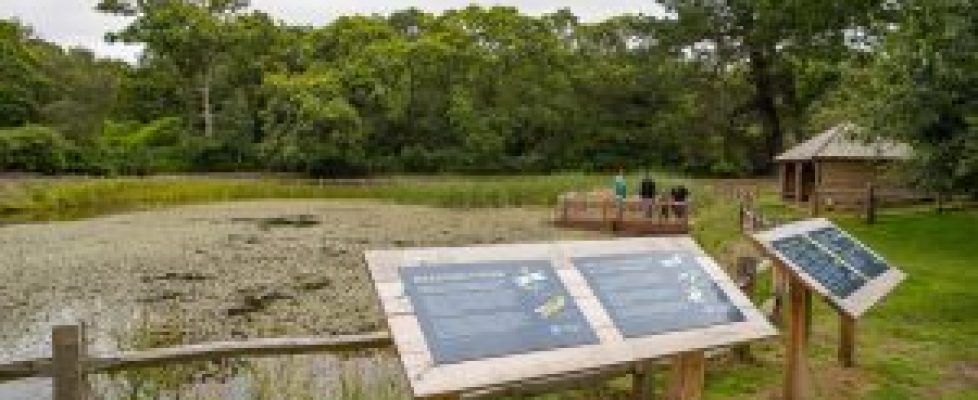
Exbury’s Dragonfly Pond includes floating pontoons so visitors can get close to the wildlife action, identification boards and an outdoor shelter for local groups and school children. Its popular Rhododendron Line steam railway even has a Dragonfly Halt platform to make it easy for more people to explore the area.
Exbury Gardens is one of seven Dragonfly Hotspots in England, and the first in Hampshire. DragonflyHotspots are special places, carefully chosen by the British Dragonfly Society because they support a good variety of dragonfly and damselfly species, are easy to access, and can provide opportunities for local communities to get involved with dragonfly conservation and events.
Exbury Gardens, located in the New Forest near Southampton, is open daily from10am – 5.30pm. Arrival time slots must be booked online in advance at www.exbury.co.uk Thanks to its unrivalled collection of rhododendrons, azaleas and camellias, Exbury Gardens is famed for its riot of spring colour, as well as a vast array of beautiful, mature rare trees. Over recent years the Hampshire garden has been expanded for all-season interest with areas designed to show off summer and autumn ‘flower power’, as well as an extension of its 1 ½-mile Rhododendron Line steam railway.
British Dragonfly Society – Over the last 60 years we have witnessed the extinction of two species of dragonfly in the British Isles (Norfolk Damselfly Coenagrion armatum and Orange-spotted Emeral Oxygastra curtisii ). At least a third of the remainder are considered to be rare, localised and have specialised habitat requirements. The British Dragonfly Society (BDS), set up in 1983, is the world’s largest organisation dedicated to the study and conservation of dragonflies, damselflies and their wetland habitats.
It is a volunteer-led membership organisation, carrying out and supporting research on dragonflies, and leading practical conservation, education and public engagement activities to teach people about the importance of dragonflies and their wetland habitats.
The greatest threats to dragonfly populations come from habitat destruction and fragmentation, pollution, inappropriate habitat management, alteration of site hydrology and the impacts of climate change. It works hard to research and identify changes in populations, as well as to advise on creating and managing suitable habitats, and to educate and engage the wider public to engender greater care for these charismatic insects.
Dragonfly facts:
They have been around for over 300 million years, way before the dinosaurs existed.
They can indicate the quality of both aquatic and terrestrial habitats thanks to their fascinating life cycle.
They are climate change indicators, as they will respond to air and water temperature changes by expanding or contracting their range.
They have a 95% success rate when hunting, making them one of the most efficient hunters on the planet.
Some larger dragonflies have been recorded flying up to 30mph
Redeveloped area The Connoisseur’s Garden open to visitors, and the Hydrangea Walk replanted for maximum flower power
New attractions include a children’s log trail and new-look visitor entrance/gift shop and plant centre
21st anniversary of Exbury Gardens Steam Railway
A horticultural treasure trove of rare plants and shrubs will be on show at Exbury Gardens in 2022 in the newly-named, The Connoisseur’s Garden.
A less-visited part of the famous 200-acre woodland garden in the New Forest has been revamped with unusual plants and shrubs to delight throughout the season.
Visitors can wander amongst a collection of stunning camellias, donated by one of the world’s most famous growers, into an expertly planted woodland glade filled with curious garden gems that boast blossom and vibrant colours. Exbury’s team has taken five years to hone and redevelop the area and in 2022 it will bear the new name, The Connoisseur’s Garden.
Kids can enjoy an exciting new log trail situated near the entrance of The Connoisseur’s Garden made from old oak, beech and Scots pine trees. Youngsters will be encouraged to walk from one end of the trail to the other without touching the ground, whilst learning about the different bark textures. And they can have their photo taken when they have reached the end sitting on the oak ‘Throne’.
The gardeners at Exbury have also been hard at work in the Hydrangea Walk which now boasts 12 new varieties, with 150 new plants in total, promising late summer flower power with a host of pastel shades.
Exbury’s renowned steam railway will be celebrating its 21st anniversary during the year, visitors will receive a discount on gardens admission when they bring their canine best friends along to Devoted to Dogs days* and new Nature Tours will be helping everyone connect with Exbury’s varied wildlife. A new-look visitor entrance with revamped gift shop and enlarged plant centre will also be open.
Thomas Clarke, head gardener of Exbury Gardens, said: “The Connoisseur’s Garden is a beautiful spot for visitors to take in the peace and tranquillity of Exbury. It’s a self-contained area full of rare and unusual trees and shrubs, predominantly summer flowering but of interest all year round. They are planted in large beds, underplanted with woodland ground cover and connected by grass paths with seating to soak up the atmosphere in the secluded glade.”
The Connoisseur’s Garden
Exbury Gardens is renowned for its collection of rhododendrons and azaleas but on the edge of Gilbury Lane the emphasis is on a different range of trees and shrubs designed to appeal to the connoisseur.
It contains a number of rare plants chosen to delight visitors throughout the season. As you enter the garden you will find a selection of camellias donated by the famous grower Jennifer Trehane, which flower in a range of beautiful colours in the early months of the year.
Another early performer is Edgeworthia chrysantha – the paperbush – whose pale-yellow flowers stand out proudly from the bare stalks of the parent plant. You should also look for Magnolia ‘Ann’ whose reddish-purple flowers light up the spring.
Elsewhere there is blossom which appears later, in mid-summer, and is to be found on plants such as Rhododendron hemsleyanum, named after a former keeper of Kew’s famous herbarium. There is also a fine specimen of Maackia amurensis which, while celebrated for its spikey panicles of white flowers in late June or early July, is also distinguished by the ghostly silver-blue colours of its new leaves. Later in the summer, the dark evergreen leaves of the magnificent Eucryphia × intermedia are covered by a mass of large white flowers in late summer.
And as the autumn arrives, two crab apple trees stand out. Malus ‘Laura’ bears clusters of fruit the size of golf balls coloured such a deep red as almost to be purple. This is a relatively young tree. In contrast, there is the venerableMalus mandshurica which is a magnificent sight when covered in a profusion of pale red apples. Finally, see if you can spot the bright red berries of the Chinese wonder tree – Idesia polycarpa – which hang in bunches like small grapes and which persist after the tree’s heart-shaped leaves have all dropped.
Exbury Gardens, located in the New Forest near Southampton, is open daily from 19 March 2022 10am – 5.30pm. Arrival time slots must be booked online in advance at www.exbury.co.uk
Thanks to its unrivalled collection of rhododendrons, azaleas and camellias, Exbury Gardens is famed for its riot of spring colour, as well as a vast array of beautiful, mature rare trees. Over recent years the Hampshire garden has been expanded for all-season interest with areas designed to show off summer and autumn ‘flower power’, as well as an extension of its 1 ½-mile Rhododendron Line steam railway.
* Devoted to Dogs days – visitors bringing their dogs to Exbury Gardens for these events receive a 20% discount on gardens admission. Discount applicable to one person per dog. Check the Exbury website for dates.
NEW River Walk – learn about native trees on a woodland trail towards the Beaulieu River estuary
NEW Dragonfly Pond learning zone & Dragonfly Halt steam railway stop [2020 launch postponed by lockdown]
Spring bulb extravaganza in Daffodil Meadow and the River of Gold, plus world-famous display of camellias, azaleas and rhododendrons
Rock garden revamp and oak tree planting programme
Embrace nature and discover the magnificence of Britain’s native trees on a new woodland trail when it opens at Exbury Gardens, one of the south’s most famous gardens, this spring.
The new River Walk will allow visitors to explore previously-hidden woodland within the 200-acre New Forest garden, with glimpses of the Beaulieu River estuary. Interpretation boards will explain how to spot some of our iconic native trees. Stretching nearly half a mile past mature oaks, field maples, yews and hazels, the trail will meander from Daffodil Meadow, which is planted with thousands of the yellow spring favourites, to the stunning flower-filled Azalea Bowl.
Garden fans can also get their spring floral fix from the River of Gold, a 100,000-bulb colour burst that weaves around rare trees near Exbury House, and from acres of world-renowned Exbury camellias, rhododendrons and azaleas.
Also new for the 2021 season will be the opportunity to:
spot wildlife action at a new Dragonfly Pond1 learning zone. Designed with the help of the UK’s leading dragonfly experts, this area will boast info boards filled with dragonfly facts and take-away tips on how you can encourage these wonderful creatures into your own back garden. An existing, large ornamental pond in the gardens has been adapted for the insects with dragonfly-friendly, native aquatic and marginal plants. Also alight from Exbury’s renowned Rhododendron Line steam railway at a new Dragonfly Halt platform to explore the pond area.
check out the rare and interesting plants being given new homes in the revamped Rock Garden. First built around 100 years ago, the Rock Garden is considered to be one of the largest in Europe.
discover 30 new native oak trees planted across the garden as part of a three-year project to help restore the magnificent tree canopy.
Tom Clarke, head gardener at Exbury Gardens, said: “In 2021 we are looking forward to celebrating the beautiful, unique, natural setting of Exbury by extending access into more woodland that visitors won’t have seen before and opening up nature areas such as our new Dragonfly Pond.
“We are also investing in the garden’s legacy for future generations by planting lots of new trees to enhance biodiversity and regenerate the treeline, and adding even more rare plants and shrubs to the Rock Garden.”
Created by Lionel de Rothschild in 1919, a passionate collector of plants and a keen supporter and sponsor of the early 20th century plant hunters, Exbury Gardens has grown to become a stunning garden paradise filled with rare plants, shrubs and trees. It boasts over 20 miles of pathways and trails.
Exbury Gardens was one of the first garden attractions in the south to reopen to the public after lockdown ended and saw a boost in admission numbers over summer and autumn 2020 from visitors keen to explore the natural world in safety. It is a proud holder of Visit Britain’s ‘We’re Good To Go’ certification, showing it adheres to current Government and public health guidance.
1 – Dragonfly Pond project launch had been planned for summer 2020 but has been rescheduled for summer 2021
Exbury Gardens, located in the New Forest near Southampton, is open daily from 1 March 2021 10am – 5.30pm. Arrival time slots must be booked online in advance at www.exbury.co.uk
Thanks to its unrivalled collection of rhododendrons, azaleas and camellias, Exbury Gardens is famed for its riot of spring colour, as well as a vast array of beautiful, mature rare trees. Over recent years the Hampshire garden has been expanded for all-season interest with areas designed to show off summer and autumn ‘flower power’, as well as an extension of its 1 ½-mile Rhododendron Line steam railway.
Iconic New Forest woodland garden to reopen with special measures in place to keep visitors safe
Revamped Iris Garden putting on a show plus early summer floral ‘wow’ in herbaceous borders and Centenary Garden
Lots of open space and room to roam with over 20 miles of pathways
Online ticket booking only with a daily visitor limit of 500 people and time slots for entering the gardens
One of the south’s most famous gardens, Exbury Gardens in the New Forest, will be reopening its gates to the public on Saturday (30 May). With 200 acres of stunning woodland landscape to explore and even some of its world-renowned rhododendrons still in bloom, Exbury will be welcoming visitors back just as its summer flower-power season kicks off.
Special measures will be in place to keep visitors safe including online ticket booking only, a daily visitor limit of 500 people, and time slots for entering the gardens, so arrivals can be staggered.
Visitors will be treated to a riot of plant colour in the herbaceous borders near Exbury House, the recently-opened Centenary Garden gearing up for its summer floral show, a revamped Iris Garden, a new Birch Walk, swathes of beautiful landscaped woodland, over 20 miles of meandering pathways, and even some of Exbury’s famous rhododendrons putting on their last blossom of the season.
Lionel de Rothschild, chairman of Exbury Gardens Trust, said: “We have 200 acres of space at Exbury filled with the most beautiful plants and trees that look absolutely spectacular at the start of the summer, and we’re so looking forward to sharing it with our visitors again. There’s lots of room to roam and experience nature at its best, and we’re putting special protective measures in place to keep everyone safe.”
To visit Exbury, visitors can book advance tickets online and choose an arrival time for their entry to the gardens. Toilets will be open and sanitised regularly, and refreshments and sandwiches will be available to purchase Wednesday-Sunday. Steam railway trains and guided buggy tours will not be operating. Full details on how to book and tips on visiting can be found at www.exbury.co.uk.
Created by Lionel de Rothschild in 1919, a passionate collector of plants and a keen supporter and sponsor of the early 20th century plant hunters, Exbury has grown to become a stunning garden paradise filled with rare plants, shrubs and trees. Its Centenary Garden, designed by Lionel’s great grand-daughter and RHS gold medal award-winning designer, Marie-Louise Agius, opened to the public last year.
“Over the last couple of months we’ve had fun sharing Exbury virtually over our social media channels but we can’t wait for the public to come back through the gates so they can experience the gardens first-hand and in all their glory,” said Marie-Louise, who has been posting images and video of the gardens during lockdown on Exbury’s Twitter, Facebook and Instagram feeds.
Exbury Gardens, located in the New Forest near Southampton, is open daily until 1 November 2020 10am – 5.30pm. Full information at www.exbury.co.uk Thanks to its unrivalled collection of rhododendrons, azaleas and camellias, Exbury Gardens is famed for its riot of spring colour, as well as a vast array of beautiful, mature rare trees. Over recent years the Hampshire garden has been expanded for all-season interest with areas designed to show off summer and autumn ‘flower power’, as well as an extension of its 1 1/2-mile Rhododendron Line steam railway.
New Dragonfly Pond learning zone & Dragonfly Halt steam railway stop
Wild Exburytheme with nature-based activities for visitors
New garden attractions include a Birch Walk & revamped Iris Garden
Exbury Gardens in the New Forest will be encouraging visitors of all ages to learn more about the natural world this year with a programme of wildlife-themed activities, and a new Dragonfly Pond education area and steam railway stop.
Building on the success of its 2019 centenary, the 200-acre woodland garden will be running a Wild Exbury programme of events when it opens for the season on 14 March until 1 November 2020. Visitors will get the chance to track wildlife around Exbury, learn bushcraft skills, pond dip, and identify rare plants and trees, as well as native wildflowers.
A Dragonfly Pond learning zone, with floating pontoons for visitors to walk on so they can get close to the wildlife action, will be unveiled. Designed with the help of the UK’s leading dragonfly experts*, this area will boast interpretation boards filled with dragonfly facts and take-away tips on how you can encourage these wonderful creatures into your own back garden. An existing, large ornamental pond in the gardens has been adapted for the insects with dragonfly-friendly, native aquatic and marginal plants.
Dragonflies are crucial bio-indictors of the health of the UK’s rivers, canals and ponds, but modern-day development, drainage and climate change have meant their numbers have fallen dramatically. By creating a dragonfly education space, Exbury Gardens hopes to boost awareness of their plight and inspire visitors to help protect them. Exbury’s Dragonfly Pond area will also include an outdoor shelter which will act as a classroom for local groups and school children. The zone will be open to visitors from late spring.
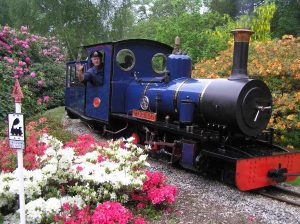
And steam railway buffs will be chuffed as Exbury’s famous Rhododendron Line steam railway will now be able to stop at the Dragonfly Halt platform, so visitors can easily disembark to explore the new pond area.
Other developments at Exbury in 2020 include a new Birch Walk leading down to Jubilee Pond, and a refurbishedIris Garden containing hundreds of stunning new iris plants, and tree ferns.
Thomas Clarke, head gardener at Exbury, said: “The gardens at Exbury are rightly famous for their unique plant collections but they also offer visitors a wonderful opportunity to get closer to nature. We have 200 acres of incredible woodland gardens, wildflower meadows and ponds to explore, plus lots of wildlife to spy.”
Created by Lionel de Rothschild in 1919, a passionate collector of plants and a keen supporter and sponsor of the early 20th century plant hunters, Exbury has grown to become a stunning garden paradise filled with rare plants, shrubs and trees. Its Centenary Garden, designed by Lionel’s great grand-daughter and RHS gold medal award-winning designer, Marie-Louise Agius, opened to the public last year, as did the River of Gold, around 150,000 mainly yellow spring bulbs planted in the lawns, weaving around rare trees near Exbury House, to give a colour burst.
Exbury is most famous for its unrivalled collection of rhododendrons, camellias and azaleas. Thousands of rhododendrons have been planted over the years and well over 1,000 hybrids have been raised by three generations of the Rothschild family.
Exbury Gardens, located in the New Forest near Southampton, is open daily from 14 March 2020 until 1 November 2020 10am – 5.30pm. Full information at www.exbury.co.uk Thanks to its unrivalled collection of rhododendrons, azaleas and camellias, Exbury Gardens is famed for its riot of spring colour, as well as a vast array of beautiful, mature rare trees. Over recent years the Hampshire garden has been expanded for all-season interest with areas designed to show off summer and autumn ‘flower power’, as well as an extension of its 1 ½-mile Rhododendron Line steam railway.
* Ruary Mackenzie Dodds and his wife Kari de Koenigswarter are leading dragonfly experts. Ruary is a Dragonfly Ambassador for the British Dragonfly Society, having opened Europe’s first public Dragonfly Sanctuary, published two books on the species and appeared on BBC Springwatch. Kari co-wrote The Dragonfly-Friendly Gardener with Ruary, and compiled the British Dragonfly’s Information Pack for Schools. She has also run courses on identifying dragonflies. The couple spend part of the year raising the importance of dragonflies as bio-indicators in New Zealand.
– Royal visitor meets Rothschild family, gardeners, staff and volunteers at the 200-acre woodland garden-
The Prince of Wales has officially opened a new Centenary Garden at Exbury Gardens, marking 100 years since the banker and plantsman Lionel de Rothschild founded the now world-famous New Forest landmark.
Created in 1919, Exbury has grown to become a stunning 200-acre garden paradise filled with rare plants, shrubs and trees, and renowned for its colourful rhododendrons. Lionel’s passion for collecting and breeding plants, and his support and sponsorship of the early 20th century plant hunters, was key to its horticultural diversity.
During a visit yesterday afternoon (Wednesday 10 July), His Royal Highness was given a tour of the new Centenary Garden by its award-winning designer Marie-Louise Agius, Lionel’s great grand-daughter. He also met members of the Rothschild family who still live at Exbury, the gardening team, estate staff and volunteers.
Marcus Agius giving a welcome address to The Prince of Wales with members of the de Rothschild family, Exbury Estate staff and guests at the Centenary Garden opening
Contemporary in style, the Centenary Garden contains subtle nods to the Rothschild family history and has been planted with a particular focus on mid to late summer. It was planted two years ago in an old tennis court, almost at the centre of Exbury Gardens, and was carefully hidden from public view whilst it grew and matured. Now open to visitors, its scores of beautiful shrubs, climbers and perennials are in full bloom, providing a peaceful and fragrant spot for the public to explore.
His Royal Highness was introduced to members of the team who built the new garden, as well as the gardeners and local volunteers who now tend it, before unveiling a commemorative plaque.
To mark his visit The Prince of Wales planted a drought-resistant ornamental beech tree (Fagus orientalis) within Exbury’s grounds, following in the footsteps of Her Majesty The Queen, The Duke of Edinburgh, The Duchess of Cornwall, Princess Margaret and Her Majesty Queen Elizabeth The Queen Mother, who have also planted trees at Exbury.
Lionel de Rothschild, grandson of Exbury Gardens’ founder and current chairman of Exbury Gardens Trust, said: “We are deeply honoured that His Royal Highness The Prince of Wales has opened the new Centenary Garden. Over the past one hundred years, members of the Royal Family have been welcomed a number of times to Exbury Gardens to enjoy their beauty and to plant commemorative trees.”
Yesterday’s event was attended also by HM Lord Lieutenant of Hampshire Nigel Atkinson, High Sheriff of Hampshire Sarah Le May, New Forest District Council Chairman Councillor Allan Glass and Hampshire County Council Chairman Councillor Charles Choudhary.
Marcus Agius, chairman of the Board of Directors of Exbury Gardens, said: “We are delighted that His Royal Highness met our gardening team and the volunteers who work so diligently to keep Exbury Gardens looking beautiful throughout the year, as well as the contractors who constructed the new Centenary Garden. This is a garden that has been built to stand the test of time and we are thrilled that visitors can now explore and enjoy it.”
As well as the opening of the new Centenary Garden, centenary celebrations at Exbury have included an award-winning Exbury Gardens display at the recent RHS Chelsea Flower Show with Millais Nurseries, a new history exhibition at Exbury’s visitor entrance, and the planting of over 100,000 bulbs which bloomed in time for the 2019 season opening.
Exbury Gardens, located in the New Forest near Southampton, is open daily until 3 November 2019 10am – 5.30pm. Full information at www.exbury.co.uk Thanks to its unrivalled collection of rhododendrons, azaleas and camellias, Exbury Gardens is famed for its riot of spring colour, as well as a vast array of beautiful, mature rare trees. Over recent years the Hampshire garden has been expanded for all-season interest with areas designed to show off summer and autumn ‘flower power’, as well as an extension of its 1 ½-mile Rhododendron Line steam railway.
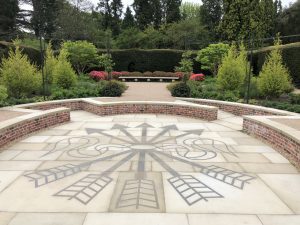
Centenary Garden – designed by Marie-Louise Agius, an RHS gold award-winning designer and helped realised by her team at Balston Agius Ltd; the garden is a contemporary, intimate space, focusing on late flowering summer perennials, interwoven between a strong vertical planted structure, with the existing yew hedging proving an evergreen backdrop. The central area is sunken, enhancing the three dimensional space, with the Rothschild 5 Arrows coat of arms in black Caledonian slate set into York stone paving. At the far end of the garden is a curved timber bench surrounded by cloud-pruned evergreen azaleas, a modern salute to the core history of the Gardens. Just over 2,000 plants have been used. Key structural plants include Gingko biloba ‘Tit’ – running through the main planting beds; Heptacodium micanoides – the pair of multi-stemmed trees in the far end bed; Hydrangea paniculata ‘Limelight’ – en masse at the far end around the Heptacodium; Rhus typhina ‘Tiger eyes’ – contrasting with the existing Yew in the north-west corner, and Miscanthus ‘Graziella’ – running in swathes between the Gingkos.
Exbury Centenary Garden, built and grown in secret, now open to the public
Hampshire’s Exbury Gardens is marking its centenary with the unveiling of a new ‘secret’ garden and plans for a showcase display at the world’s most famous flower show, RHS Chelsea.
Created by Lionel de Rothschild in 1919, a passionate collector of plants and a keen supporter and sponsor of the early 20th century plant hunters, Exbury has grown to become a stunning garden paradise in the New Forest filled with rare plants, shrubs and trees.
Now its gates are open to the public for the 2019 season, visitors can get their first glimpse of a new Centenary Garden designed by Lionel’s great grand-daughter and RHS gold medal award-winning designer, Marie-Louise Agius. This was planted within Exbury Gardens in 2017 and has been carefully hidden from public view, whilst it grows and matures. Contemporary in style, it contains subtle nods to the family history and has been planted with a particular focus on late summer.
A stream of spring bulbs is also starting to bloom. Around 100,000 yellow and blue (Rothschild family colours) bulbs have been planted in the lawns, weaving around rare trees near Exbury House, to give a centenary colour burst including daffodils, crocus and bluebells.
Visitors can get the chance to learn about the extraordinary story behind this garden which was originally created over just 20 years before the outbreak of WW2 in a special exhibition next to the main entrance and ticket office. An official history book will also be published later in the year.
Exbury’s famous rhododendrons will be showcased at RHS Chelsea Flower Show in May 2019 in a collaboration with experts Millais Nurseries. Exbury and Millais have been working together to conserve some of the more rare and threatened rhododendrons in their collection. The display will aim to evoke the ‘spirit’ of Exbury Gardens.
Thomas Clarke, head gardener at Exbury, said: “The 1920s were the golden age of woodland gardening and Exbury, under the careful eye of Lionel de Rothschild and his staff, was at the cutting edge of this movement. The location, climate, existing oak woodland and acid soil all allowed for the creation of one of the finest gardens of its kind in the UK. Combine this with the legacy of the great plant hunters, and the extensive plant breeding programme at Exbury, and we are fortunate enough to have inherited a truly wonderful garden packed full of horticultural treasures.
“In this centenary year we are delighted to be unveiling some fantastic new projects plus a continued focus on our work to conserve and develop the plants and landscape at Exbury for the next 100 years.”
Exbury Gardens steam railway
Exbury Gardens, located in the New Forest near Southampton, will open daily until 3 November 2019 10am – 5.30pm. Adult tickets £12.50, children (3-15yrs) £4, under 3s are free and a family ticket is £29. Full information at www.exbury.co.uk